• Home
  • Vipassana Center
  • TN Videos
  • Photos
  • Contact
  • Khmer Heroes
  • Networks
  • Obituaries
  • Events
  • Buddhism
  • Poems
  • Quotations
Header Image

Archive for Events – Page 4

Māgha Pūjā at Wat Kiryvongsa Bopharam on JAN 28, 2564/2021

By admin · Comments (0)
Sunday, January 17th, 2021

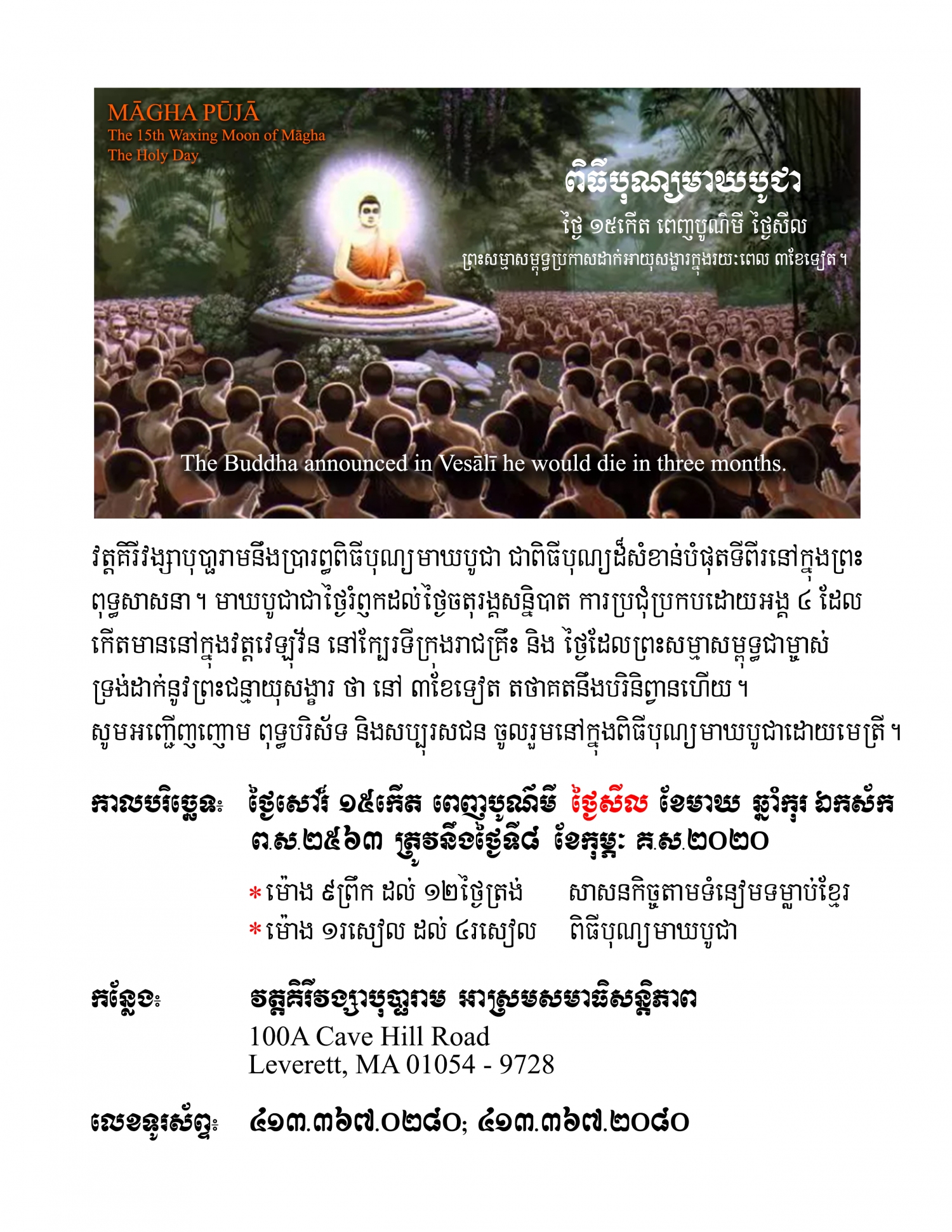
វត្ដគិរីវង្សាបុប្ផារាម អាស្រមសមាធិសន្ដិភាព នឹងប្រារព្ធពិធីបុណ្យមាឃបូជា នៅថ្ងៃព្រហស្បតិ៍ ១៥កើត ពេញបូណ៌មី ថ្ងៃសីល ឆ្នាំជូត ទោស័ក ព.ស.២៥៦៤ ត្រូវនឹងថ្ងៃទី២៨ ខែមករា គ.ស.២០២១
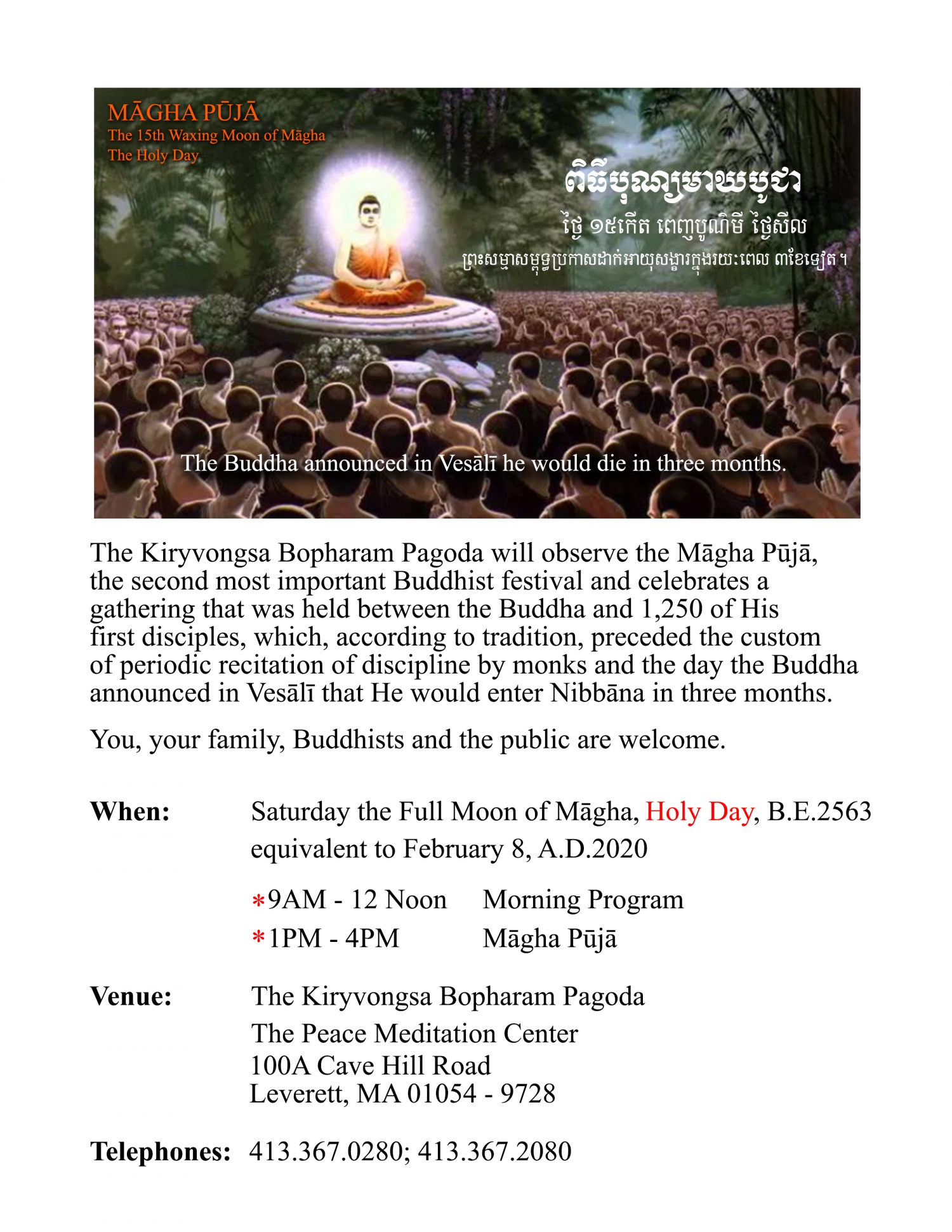
The Kiryvongsa Bopharam Pagoda, the Peace Meditation Center to observe the Māgha Pūjā on Thursday the 15th Waxing Moon of Māgha, Day of Abstinence, B.E.2564 equivalent to January 28, A.D.2021.
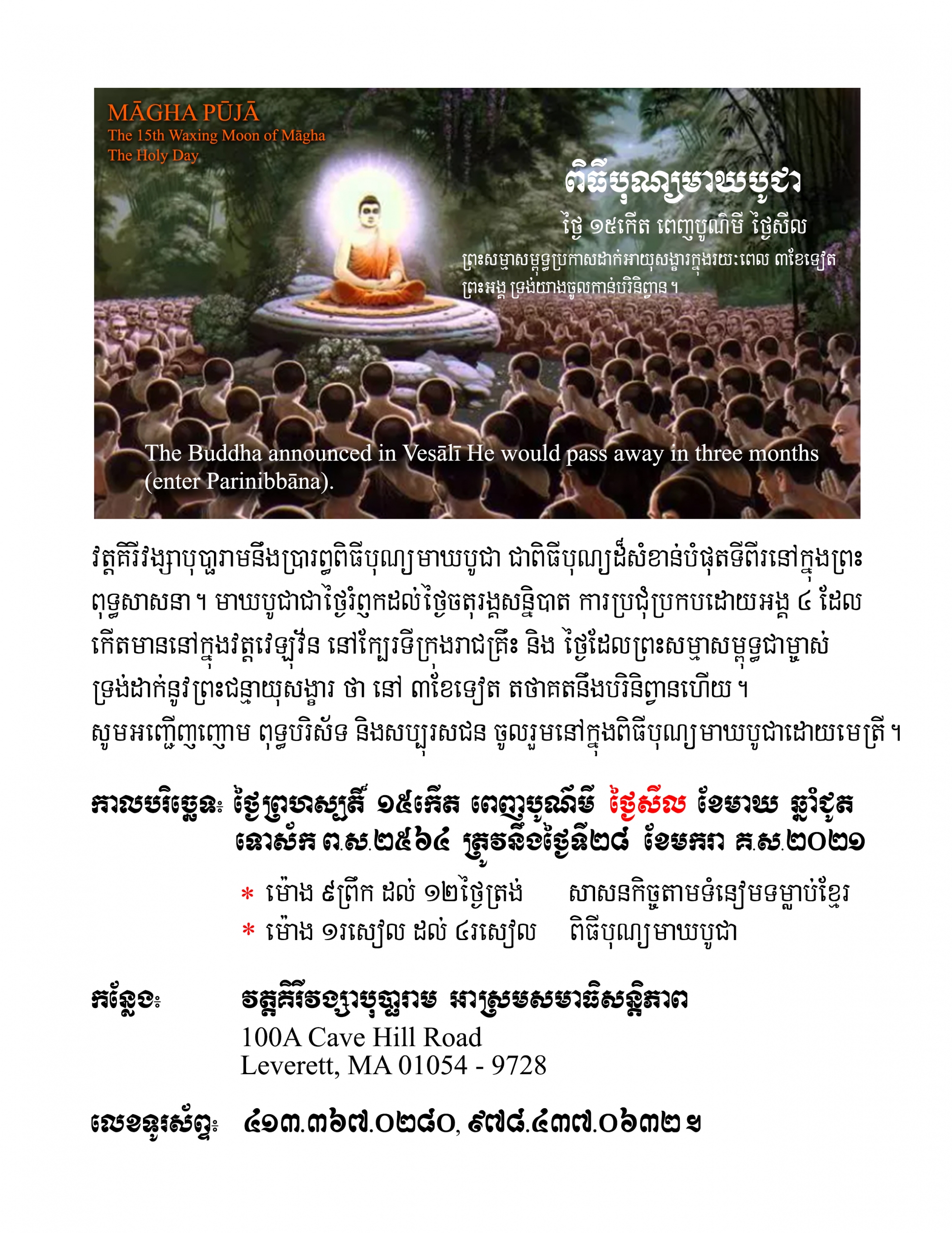
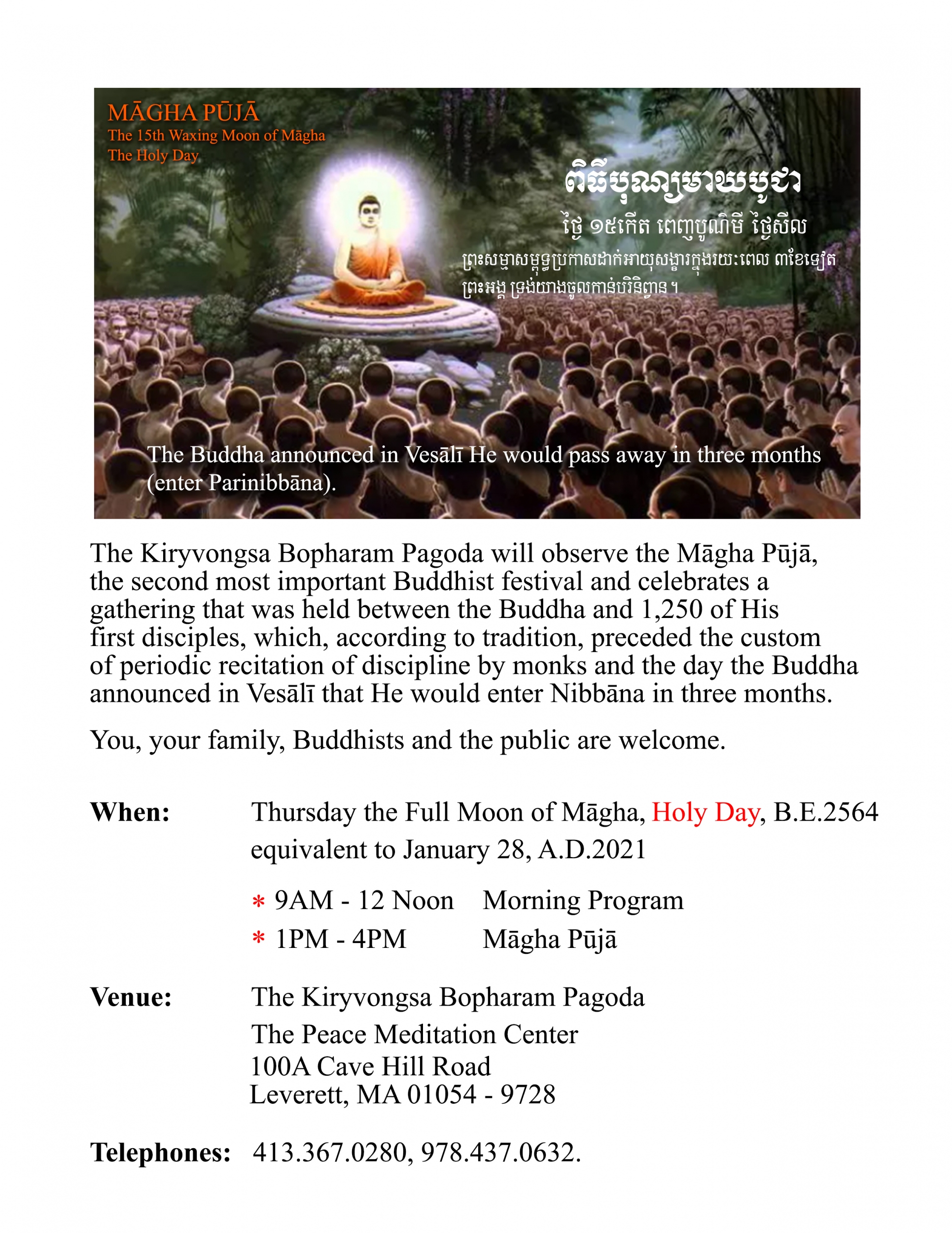
Venue: The Kiryvongsa Bopharam Pagoda, the Peace Meditation Center
100A Cave Hill Road, Leverett, MA 01054 – 9728
Tel.: 413.367.0280, 978.437.0632

Background on មាឃបូជា Māgha Pūjā
Māgha Pūjā is the second most important Buddhist festival, celebrated on the full moon day of the third lunar month in Cambodia, Laos, Thailand, Sri Lanka and on the full moon day of Tabaung in Myanmar. It celebrates a gathering that was held between the Buddha and 1,250 of his first disciples, which, according to tradition, preceded the custom of periodic recitation of discipline by monks. On the day, Buddhists celebrate the creation of an ideal and exemplary community, which is why it is sometimes called Saṅgha Day, the Saṅgha referring to the Buddhist community, and for some Buddhist schools this is specifically the monastic community. In Thailand, the Pāli term Māgha-pūraṇamī is also used for the celebration, meaning ‘to honor on the full moon of the third lunar month’. Finally, some authors have also referred to the day as the Buddhist All Saints Day.

Celebration of Māgha Pūjā is first known of in the modern period, with the institution of it in Thailand, by King Rama IV (A.D.1804 – A.D.1868). It is a public holiday in many Southeast Asian countries and is an occasion when Buddhists go to the temple to perform merit-making activities, such as alms giving, meditation and listening to teachings. It has been proposed as a more spiritual alternative to the celebration of Valentine’s Day.

Māgha is derived from the name of the third month in the traditional Indian lunar calendar, on which the celebration is held. It is also the name of a star, which during this period is close to the full moon. Māgha Pūjā is held on the full moon day. In a leap year, the celebration will be postponed to the full moon day of the fourth lunar month.

Māgha Pūjā day marks an event occurring at the Veḷuvana grove, near Rājagaha (present Rajgir) in northern India, ten months after the enlightenment of the Buddha. The traditional story goes that a meeting is held in the afternoon, that has four characteristics:

1,250 disciples come to see the Buddha that evening without being summoned;​ These are mostly pupils from the Buddha’s recently converted disciples, such as the three Kassapa brothers, and the monks Sāriputta and Mogallāna.
All of them are Arahants, enlightened disciples;

All have been ordained by the Buddha himself, and therefore are his direct spiritual descendants;
It is the full-moon day of the third lunar month.

Because of these four factors, Māgha Pūjā is also known as the Fourfold Assembly Day. On this occasion, the Buddha teaches those arahants a summary of Buddhism, called the Ovādapatimokkha. In these, three principles are given:

“The non-doing of evil / the full performance of what is wholesome / the total purification of the mind.”

This is followed by a formulation of Buddhist ideals:

“Patience (and) forbearance are the highest austerity. The awakened ones say nibbāna is the highest. One is certainly not a wanderer if one injures others; one is not an ascetic if one harms another.”

Finally, the last stanza is about the path of religious practice:

“Not abusing, not injuring, and restraint under the rules of discipline, and knowing moderation in eating, and secluded lodgings, and exertion in respect of higher thought, this is the teaching of the awakened ones.”

According to the traditional Pāli commentaries, the Buddha continued to teach this summary for a period of twenty years, after which the custom was replaced by the recitation of the monastic code of discipline by the Saṅgha themselves. On Māgha Pūjā, Buddhists celebrate the creation of an ideal and exemplary community.

Māgha Pūjā is also the day that the Buddha is believed to have announced in Vesālī he would die in three months, after which a miraculous earthquake followed.​​​ Moreover, in Sri Lanka, it is considered the day that the Buddha appointed his two main disciples, the monks Sāriputta and Moggallāna. Apart from the religious meaning, Māgha Pūjā also reflects the Southeast Asian agricultural year, as it is celebrated after the harvest.

It is unknown how traditional Buddhist societies celebrated this event in pre-modern times, but in Thailand, the first known instance was during the reign of the Thai king Rama IV (1804–68), who instituted it. He first held it in the palace only. In the evening, 31 monks would recite the Ovādapatimokkha, lit lanterns around the ubosot (ordination hall), and give a sermon about the same Ovādapatimokkha. A recitation text used for this occasion is attributed to Rama IV. Rama IV’s successor Rama V (A.D.1853 – A.D.1910) expanded the practice and organized it as a national celebration in the Temple of the Emerald Buddha. From Thailand, the practice spread to neighboring countries. Already in A.D. 1937, the ceremony was widely held and observed in Thailand.

Māgha Pūjā is a day that laypeople make merit. Monastics and devotees will hold processions, light candles, and make offerings. Māgha Pūjā is celebrated most extensively in Cambodia and Thailand, but it is a national holiday in most Southeast Asian countries, such as Laos, Myanmar and Cambodia.

In Thailand, Māgha Pūjā was instituted by Rama IV. It is currently designated as a national holiday, on which sale of alcohol is strictly prohibited. On the evening of Māgha Pūjā, most temples in Thailand hold a candlelight procession. Furthermore, people will make merit by going to temples and by joining in with activities, such as listening to teachings, giving alms, etc. At times, special events are also held, such as a recital of the entire Buddhist scriptures and ceremonies for avowing oneself as a Buddhist lay person. In A.D.2006, the government of Thailand made an announcement that Māgha Pūjā should be celebrated as a “national day of gratitude.” Māgha Pūja was therefore presented as a day of spiritual love and gratitude instead.

In Sri Lanka and Cambodia, Māgha Pūjā is also observed. In Chinese communities, as well as in Myanmar, a similar festival as Māgha Pūjā is observed. The Burmese people celebrate this on the full moon of the month Tabaung according to their traditional calendar. Fifteen days before this full moon day, a Shwedagon Pagoda Festival is held, on which a ceremony is held for offerings to the 28 Buddhas (from Taṇhaṅkara to Gotama Buddha), followed by a 10-day, continuous recital of Buddhist texts. Burmese devotees make merits and meditate during this period.

Māgha Pūjā has also become a popular event among Western Buddhist converts in the West. Wikipedia

ផ្សាយនៅថ្ងៃអាទិត្យ ៤កើត ខែមាឃ ឆ្នាំជូត ទោស័ក ព.ស.២៥៦៤ ត្រូវនឹងថ្ងៃទី១៧ ខែមករា គ.ស.២០២១
Sunday the 4th Waxing Moon of Māgha B.E.2564 equivalent to January 17, A.D.2020 Year of the Rat
Comments (0)
Categories : Events

Kathin at Kiryvongsa Bopharam Pagoda on OCT 24 – 25

By admin · Comments (0)
Monday, September 7th, 2020

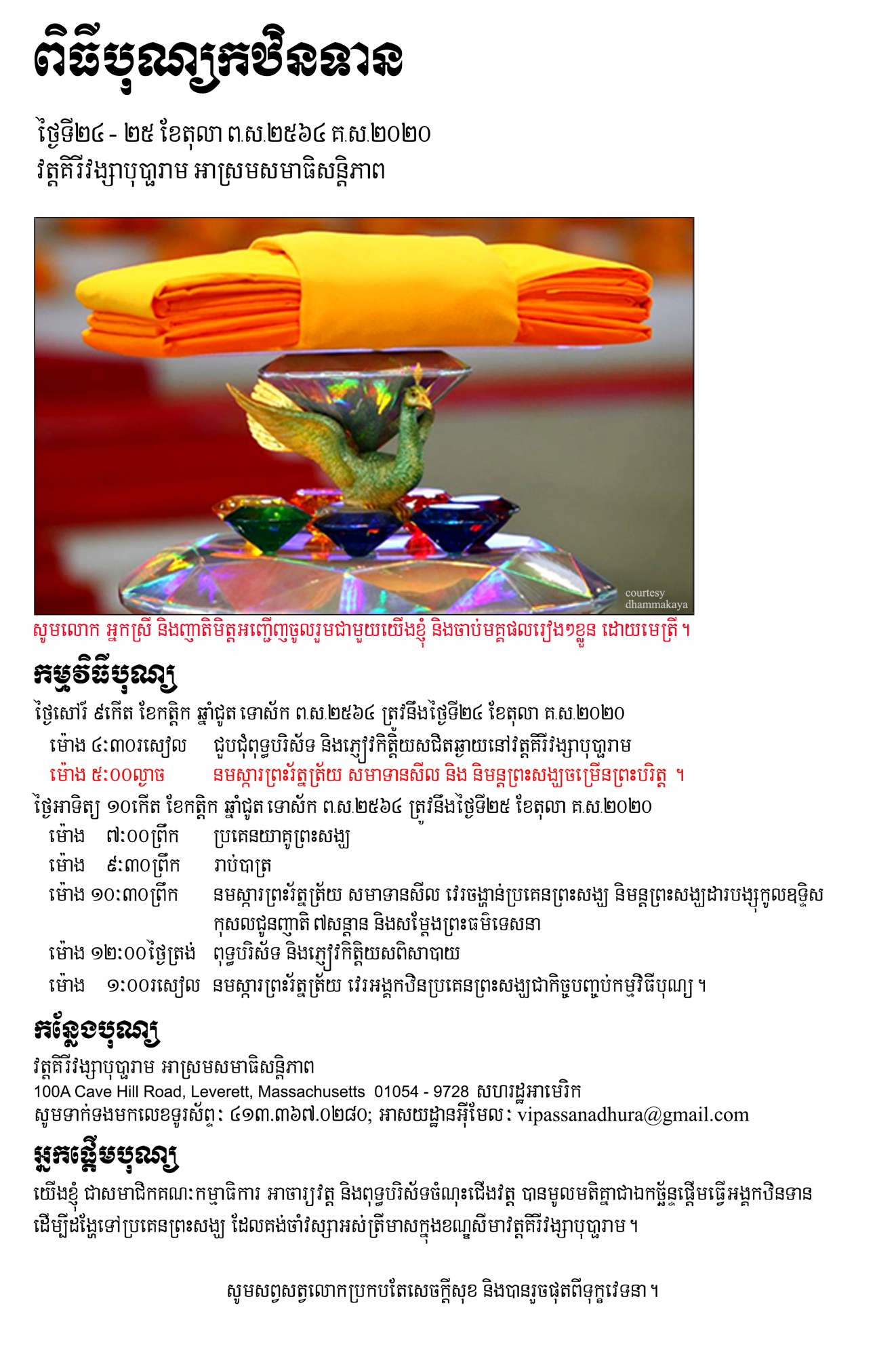
ពិធីបុណ្យកឋិន នៅវត្ដគិរីវង្សាបុប្ផារាម ថ្ងៃទី២៤ – ២៥ តុលា
Kathin to be held at the Kiryvongsa Bopharam Pagoda on Saturday – Sunday October the 9th – 10th Waxing Moon of Kattikā B.E.2564 equivalent to October 24 – 25, A.D.2020
ថ្ងៃចន្ទ ៦រោច ខែភទ្របទ ឆ្នាំជូត ទោស័ក ព.ស.២៥៦៤ ត្រូវនឹងថ្ងៃទី៧ ខែកញ្ញា គ.ស.២០២០
Monday the 6th Waning Moon of Poṭṭhapāda B.E.2564 equivalent to September 7, A.D.2020 Year of the Rat
កន្លែងៈ វត្ដគិរីវង្សាបុប្ផារាម អាស្រមសមាធិសន្ដិភាព Wat Kiryvongsa Bopharam, the Peace Meditation Center
100A Cave Hill Road, Leverett, MA 01054 – 9728
លេខទូរស័ព្ទៈ ៤១៣.៣៦៧.០២៨០, ៤១៣.៣៦៧.២០២៨
413.367.0280, 413.367.2028

អំពីពិធីបុណ្យកឋិនទានសង្ខេប
Brief Kathin History
ដើម្បីធ្វើបុណ្យកឋិនឲ្យបានត្រឹមត្រូវតាមពុទ្ធានុញ្ញាត ពុទ្ធបរិស័ទត្រូវប្រព្រឹត្ដដូចតទៅ៖
១. វត្ដអារាមត្រូវតែបានបញ្ចុះពុទ្ធសីមារួចរាល់ហើយមុនពេលប្រារព្ធពិធីបុណ្យកឋិន។
២. ព្រះភិក្ខុ ដែលជាអ្នកក្រាលគ្រង ត្រូវបានគង់ចាំវស្សាអស់កាលត្រីមាសគម្រប់ ៣ខែក្នុងរដូវវស្សានៅក្នុងពុទ្ធសីមានៃវត្ដអារាម ដែលពុទ្ធបរិស័ទដង្ហែអង្គកឋិនចូលទៅប្រគេននោះ។
៣. សាមណេរមិនអាចក្រាលគ្រងកឋិនបានទេ។ សាមណេរទទួលបានកឋិនតាមរយៈព្រះភិក្ខុ អ្នកក្រាលគ្រង។
៤. ភិក្ខុដាច់ត្រៃសរណគមន៍ៈ ភិក្ខុមិនយកព្រះពុទ្ធ ព្រះធម៌ ព្រះសង្ឃ ជាទីពឹងទីរព្ញក គឺភិក្ខុចងខ្សែអំបោះក្រហម អំបោះស ស្រោចទឹក ប្រោះទឹក ធ្វើគ្រូទាយ ធ្វើគ្រូមន្ដអាគមអូមអាម ធ្វើពិធីក្រុងពាលី បោះបាយបិណ្ឌ រៀបបាយសី ភិក្ខុយកវត្ថុដទៃជាទីពឹងទីរព្ញក​ (យកអបិយជំនឿមកដាក់ក្នុងខ្លួន) យកវត្ថុខាងក្រៅពីពុទ្ធសាសនាមកជាទីពឹងទីរព្ញក ។ល។ និយាយឲ្យខ្លី គឺភិក្ខុដែលមិនប្រតិបត្ដិតាមសេចក្ដីប្រៀនប្រដៅនៃព្រះសម្មាសម្ពុទ្ធ គឺធ្វើកឋិនមិនបានអានិសង្សកឋិនទេ គឺបានត្រឹមតែបច្ច័យបួន។
៥. ភិក្ខុបរាជិក គឺភិក្ខុដាច់ត្រៃសរណគមន៍ ដាច់សីលអស់ហើយ ធ្វើកឋិនមិនបានអានិសង្សកឋិនទេ។
៦. បដិគ្គាហកៈ ឬព្រះភិក្ខុ ដែលជាអ្នកក្រាលគ្រង មានសេរីភាពក្នុងខ្លួនចាប់តាំងពីបានក្រាលអនុមោទនាកឋិនពេលណាមក តែងបាននូវអានិសង្ស ៥យ៉ាងគឺ៖
ក. អនាមន្ដចារោ — ត្រាច់ (និមន្ដ) ទៅណាមិនបាច់លាភិក្ខុផងគ្នា
ខ. អសមាទានចារោ — ត្រាច់ (និមន្ដ) ទៅណាមិនបាច់យកត្រៃចីវរគ្រប់ប្រដាប់ អាចដាក់ទុកនៅកន្លែងបាន
គ. ភិក្ខុឆាន់គណភោជន និងបរមប្បរភោជនបាន
ឃ. យាវទត្ថចីវរំ — ភិក្ខុទុកដាក់អតិរេកចីវរបានតាមប្រាថ្នា
ង. យោ ច តត្ថចីវរុប្បាទោស សោ នេសំ ភវិស្សតិ — អានិសង្សលាភ ដែលកើតឡើងក្នុងទីនោះ ត្រូវបានតែភិក្ខុ ដែលគង់នៅក្នុងអាវាសនោះ។

ទាយក ទាយិកាក៏បានអានិស្សដ៏ក្រៃលែងច្រើនជាអនេកប្បការ ដូចជាស្លាប់ពីលោកនេះទៅៗកើតសុគតិភព លុះចុតិ (ស្លាប់) ពីសុគតិភពមកឋានមនុស្ស បានជាស្ដេចចក្រពត្ដិគ្រប់គ្រងទ្វីបទាំងបួន អស់បុណ្យពីស្ដេចចក្រពត្ដិមកកើតស្ដេចតូចៗ អស់ពីស្ដេចតូចៗមកកើតជាសេដ្ឋីគហបតី អស់ពីគហបតីមកកើតកូនអ្នកមាន កូនអ្នកក្រមិនកើតទេ នេះជាអានិសង្ស ដែលអ្នកធ្វើកឋិន ត្រូវបានអានិសង្សនេះឯង ហៅថា នាមធម៌។

វត្ថុ ឬរបស់ដែលធ្វើឲ្យកើតជាកឋិនមានបី៖ ស្បង់មួយ ចីពរមួយ សង្ឃាដីមួយ ទាំងបីនេះហៅថា ត្រៃ។ វត្ថុឬរបស់ក្រៅពីត្រៃមាន៖ បាត្រ ឆត្រ កន្ទេល ខ្នើយ ព្រំ គ្រែ តុ ទូ កៅអី ហៅថា បរិក្ខាររបស់កឋិន ស្បង់ ចីពរ សង្ឃាដី យកតែស្បង់មួយធ្វើកឋិនក៏បាន។

កឋិនធ្វើកម្របានត្រឹមត្រូវតាមវិន័យបញ្ញត្ដិណាស់ ប្រសិនបើផ្នែកឧបាសក ឧបាសិកា កាត់ស្បង់ចីពរត្រឹមត្រូវតាមវិន័យបញ្ញត្ដិ ហើយបដិគ្គាហកៈក្រាលគ្រងបានត្រឹមត្រូវតាមវិន័យបញ្ញត្ដិ កឋិននេះឈ្មោះថា បានអានិសង្សទាំងអ្នកទទួល ទាំងអ្នកឲ្យ។

ប្រសិនបើទាយក ទាយិកា កាត់ស្បង់ចីពរបានត្រឹមត្រូវយកធ្វើកឋិន ប៉ុន្ដែបដិគ្គាហកៈ ភិក្ខុអ្នកក្រាលគ្រងមិនបានត្រឹមត្រូវ កឋិននេះមិនបានកើតជាកឋិន ក្លាយជាបុណ្យបច្ច័យបួន អានិសង្សមិនបានដល់ភិក្ខុអ្នកក្រាលគ្រងទេ បានតែទាយក ទាយិកា អ្នកឲ្យ។

បុណ្យទាំងអស់ក្នុងព្រះពុទ្ធសាសនា អានិសង្សដែលត្រូវបាន គឺបានតែទាយក ទាយិកា ឧបាសក ឧបាសិកា ជាអ្នកឲ្យទេ អ្នកទទួលមិនបានអានិសង្សទេ។

ដោយឡែកប្លែកតែពិធីបុណ្យកឋិន ព្រោះបុណ្យកឋិនបានទាំងសងខាង គឺអ្នកឲ្យក៏បានអានិសង្ស អ្នកទទួលក៏បានអានិសង្ស។

ការធ្វើកឋិនមិនបានត្រឹមត្រូវតាមវិន័យបញ្ញត្ដិជាវិបត្ដិយ៉ាងធ្ងន់ចំពោះភិក្ខុអ្នកក្រាលគ្រង និងអ្នកអនុមោទនា។ ឯទាយក ទាយិកា ឧបាសក ឧបាសិកា អ្នកឲ្យមិនមានវិបត្ដិអ្វីឡើយ គ្រាន់តែមិនបានអានិសង្សកឋិន ត្រឡប់ទៅជាបានអានិសង្សបច្ច័យបួនវិញ។

វិបត្ដិភិក្ខុ គឺសម្គាល់ថា បានក្រាលគ្រង និងអនុមោទនាកឋិនរួចហើយ៖
១.ទុកសង្ឃាដីនៅកន្លែងនិមន្ដទៅកាន់ទីកន្លែងផ្សេងៗ
២. ទុកអតិរេកចីវរឲ្យលើសពី ១០ថ្ងៃ
៣. ឆាន់គណភោជន និងបរមប្បរភោជនព្រមគ្នា និមន្ដទៅណាមិនបានប្រាប់ភិក្ខុផងគ្នាអស់រយៈពេល ៥ខែសម្គាល់ថា អានិសង្សកឋិន ដែលត្រូវបាន។

ចុះប្រសិនបើធ្វើកឋិនមិនត្រូវតាមវិន័យបញ្ញត្ដិ ហើយអ្នកក្រាលគ្រងកឋិនក៏មិនត្រឹមត្រូវជាវិបត្ដិដល់ភិក្ខុ អស់រយៈពេល ៥ខែ ចាប់ពីថ្ងៃ ១រោច ខែអស្សុជ ដល់ថ្ងៃពេញបូណ៌មី ខែផល្គុន ចំពោះភិក្ខុ ដែលក្រាលគ្រងកឋិនមិនត្រឹមត្រូវតាមវិន័យនោះ គឺភិក្ខុអ្នកក្រាលគ្រងមិនចេះ ឬមិនយល់នូវអានិសង្ស ៥ មិនយល់ មិនដឹងនូវមាតិកា ៨ បលិពោធ ២ ក៏មិនយល់ អនត្ថតាការ ២៤ ក៏មិនដឹង មិនយល់ អត្ថតាការ ១៧ ក៏មិនយល់ មិនដឹង។ ភិក្ខុអ្នកក្រាលគ្រងកឋិន ប្រសិនបើមិនយល់ មិនដឹងនូវលក្ខណៈ ៥ចំណុចនេះ ប្រសិនបើក្រាលគ្រងកឋិនៗនោះមិនកើតជាកឋិនទេ កឋិនក្លាយទៅជាបច្ច័យបួនពិតប្រាកដ។

ដូច្នេះហើយបានជាលោកអ្នកប្រាជ្ញទាំងឡាយបានប្រៀបធៀបការធ្វើកឋិនទៅនឹងឈើស្នឹង ឈើស្នឹងគឺជាឈើដែលគេកាត់ដាច់ពាក់កណ្ដាលដើម ហើយគេយកចំណែកខាងចុងទៅដោតវានឹងផែនដី ឈើនោះកម្រនឹងបានដុះលូតលាស់។ យ៉ាងណាមិញ រីឯពិធីបុណ្យកឋិនក្រធ្វើឲ្យបានត្រឹមត្រូវតាមវិន័យបញ្ញត្ដិ ក៏យ៉ាងនោះដែរ។

រៀបរៀងដោយព្រះភិក្ខុ តេជប្បញ្ញោ គ្រូសមាធិកម្មដ្ឋាន និងជាអតីតព្រះចៅអធិការវត្ដគិរីវង្សាបុប្ផារាម
ខែមិគសិរ ព.ស.២៦៥៤ ខែធ្នូ គ.ស.២០១០ Read More→

Comments (0)
Categories : Events

Wat KB celebrating Ancestors Memorial Festivity on SEP 2 – 19

By admin · Comments (0)
Monday, August 10th, 2020

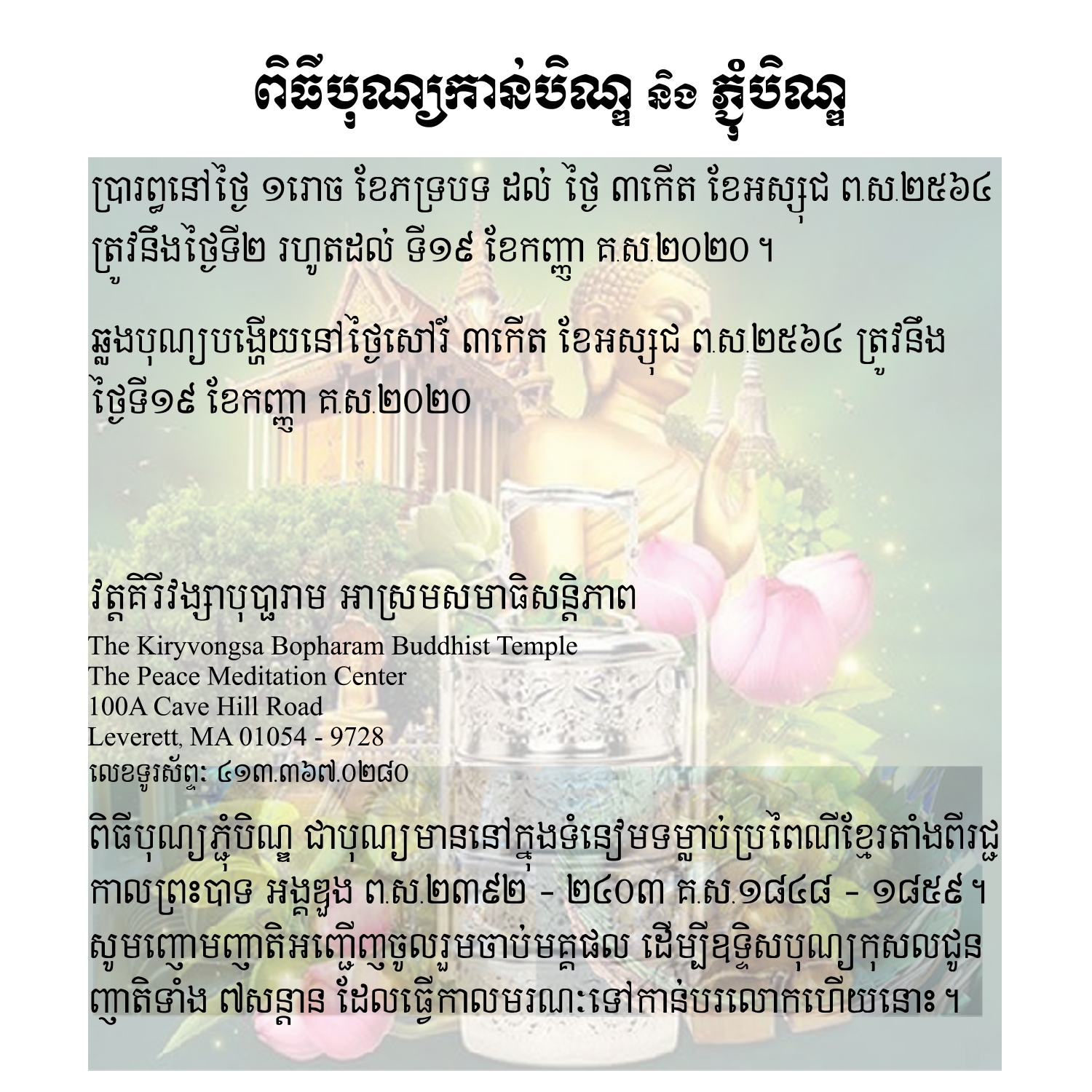
ពិធីបុណ្យកាន់បិណ្ឌ និងពិធីបុណ្យភ្ជុំបិណ្ឌ នឹងប្រារព្ធនៅថ្ងៃ ១រោច ខែភទ្របទ ដល់ថ្ងៃ ៣កើត ខែអស្សុជ ព.ស.២៥៦៤ ត្រូវនឹងថ្ងៃទី២ ដល់ថ្ងៃទី១៩ ខែកញ្ញា គ.ស.២០២០
The Kiryvongsa Bopharam Buddhist Temple​ celebrating Ancestors Memorial Festivity on SEP 2 – 19

វត្ដគិរីវង្សាបុប្ផារាម អាស្រមសមាធិសន្ដិភាព
The Kiryvongsa Bopharam Buddhist Temple​ celebrating Ancestors Memorial Festivity on SEP 2 – 19
The Peace Meditation Center
100A Cave Hill Road
Leverett, MA 01054 – 9728
Tel.: 413.367.0280

Read More→

Comments (0)
Categories : Events

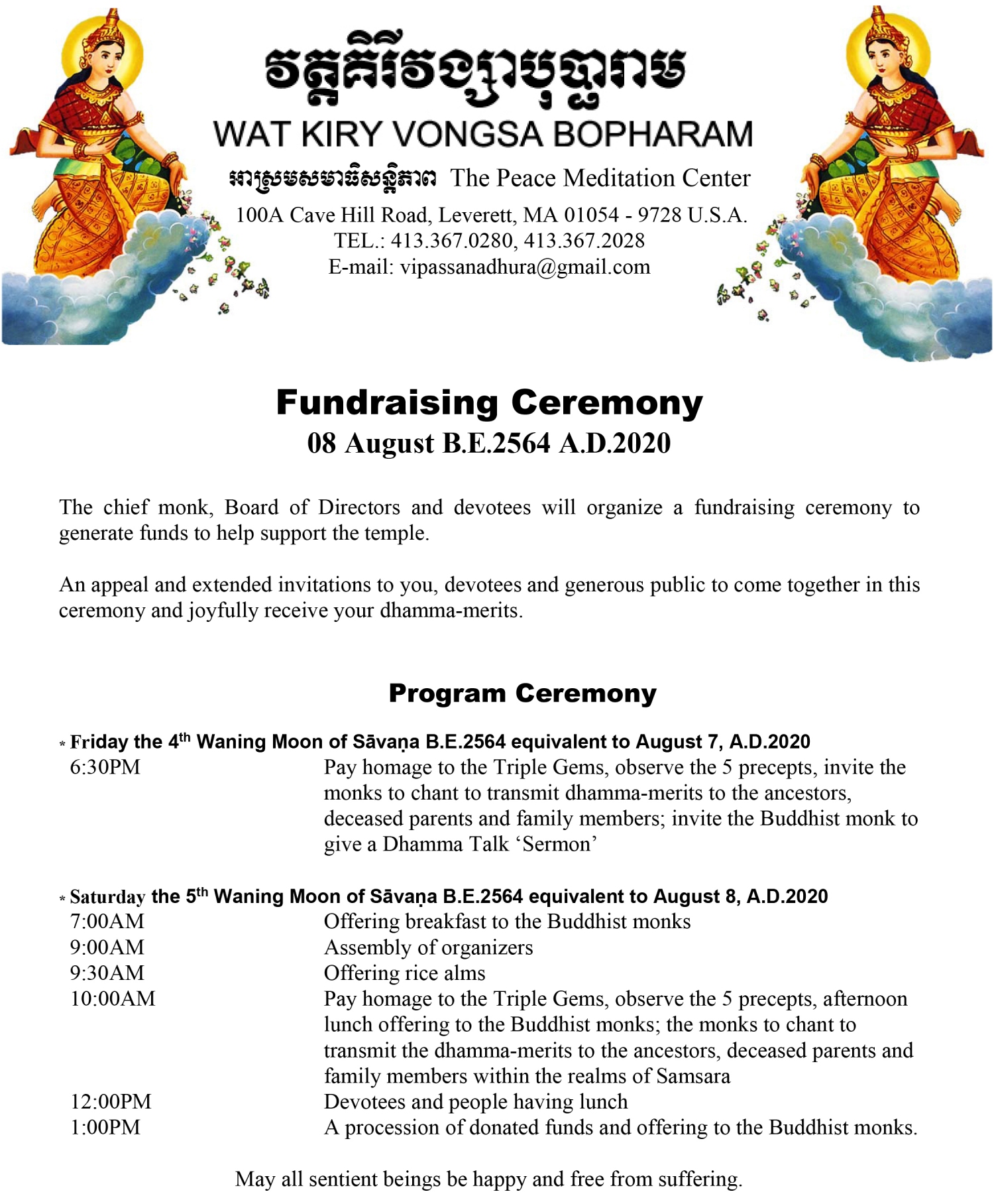
Fundraising Ceremony on AUG 8

By admin · Comments (0)
Thursday, July 2nd, 2020

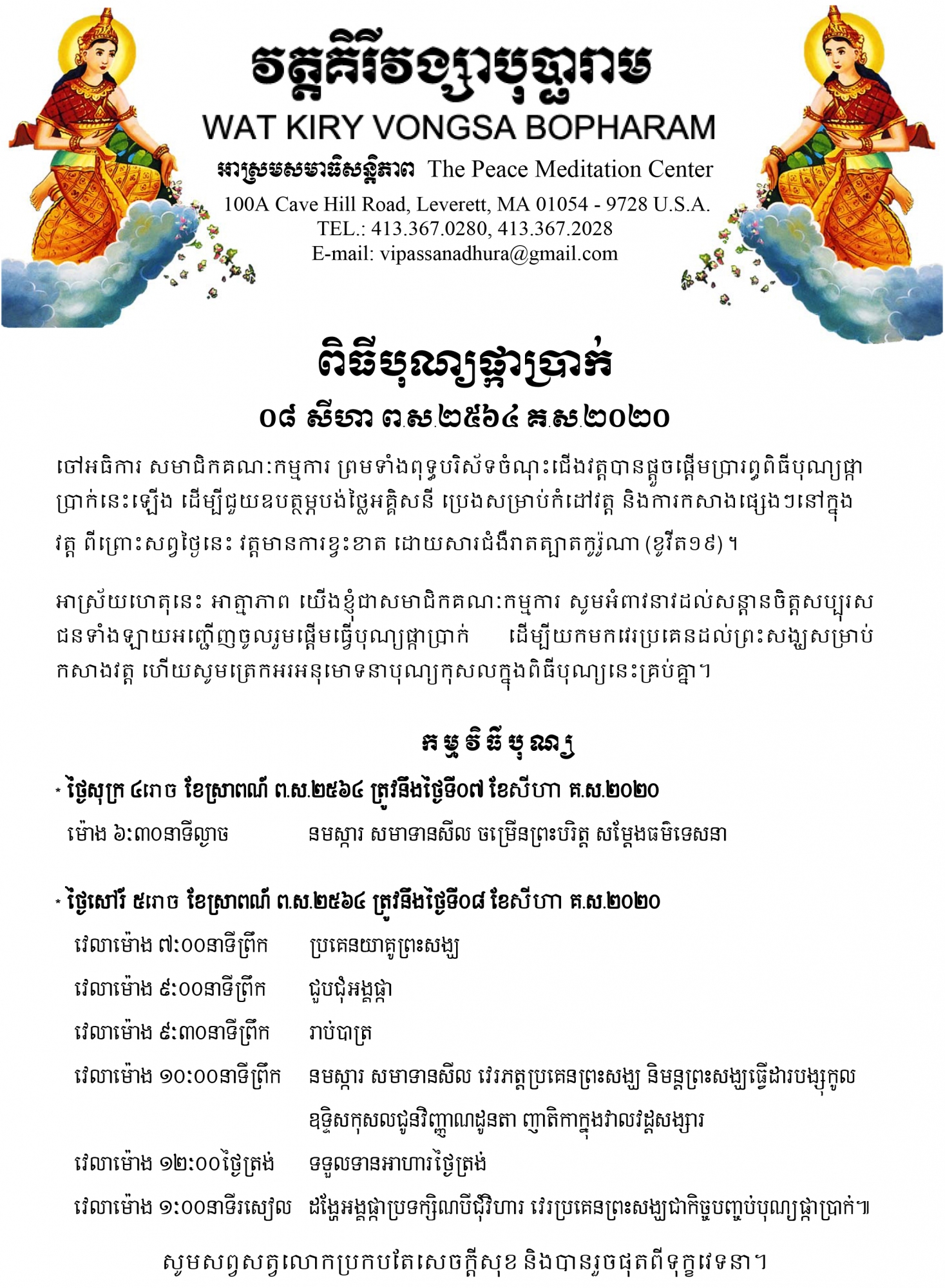
ពិធីបុណ្យផ្កាប្រាក់ នៅថ្ងៃទី៨ ខែសីហា
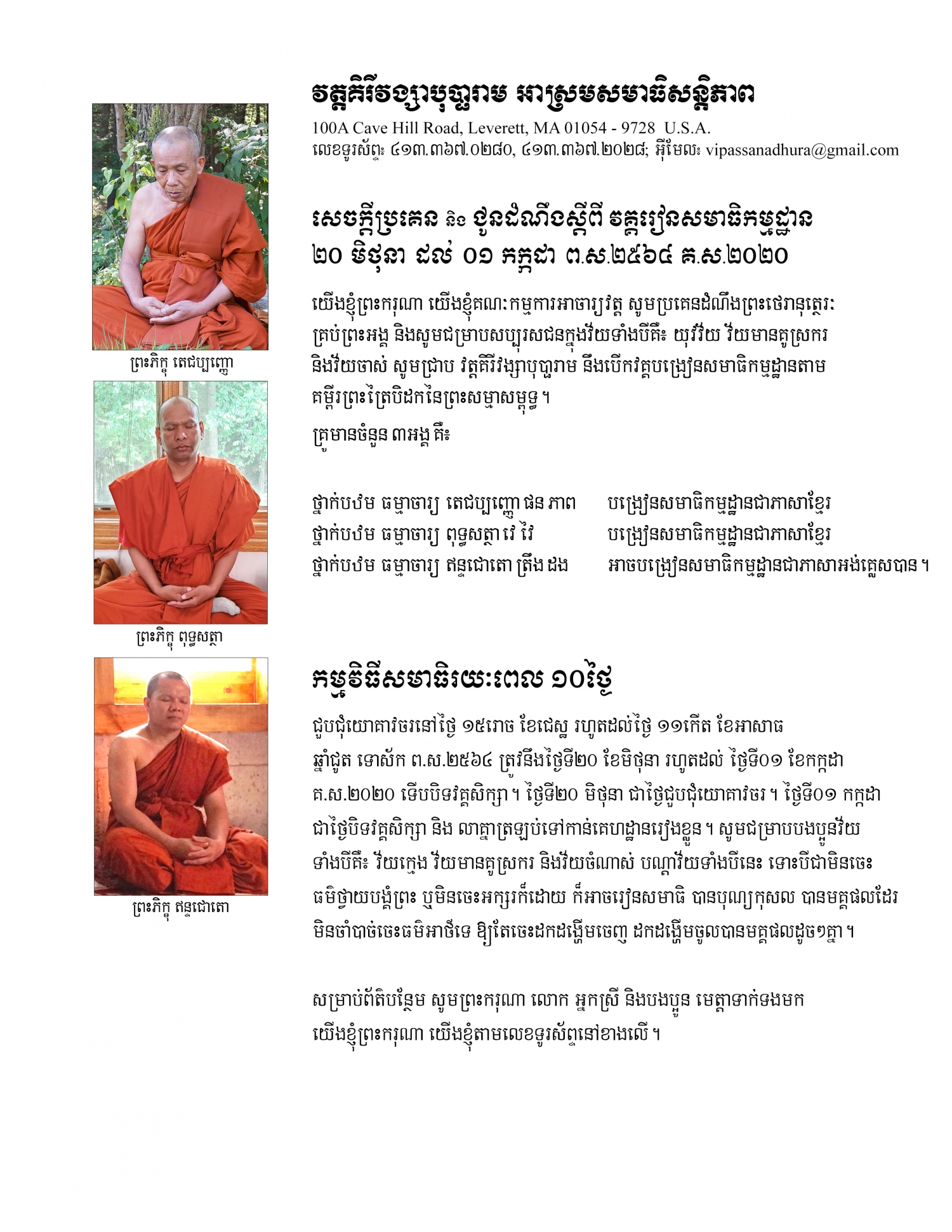
ថ្ងៃព្រហស្បតិ៍ ១៣កើត ខែអាសាឍ ឆ្នាំជូត ទោស័ក ព.ស.២៥៦៤ ត្រូវនឹងថ្ងៃទី២ ខែកក្កដា គ.ស.២០២០
Thursday the 13th Waxing Moon of Āsāḷha B.E.2564 equivalent to​ July 2, A.D.2020 Year of the Rat
Comments (0)
Categories : Events

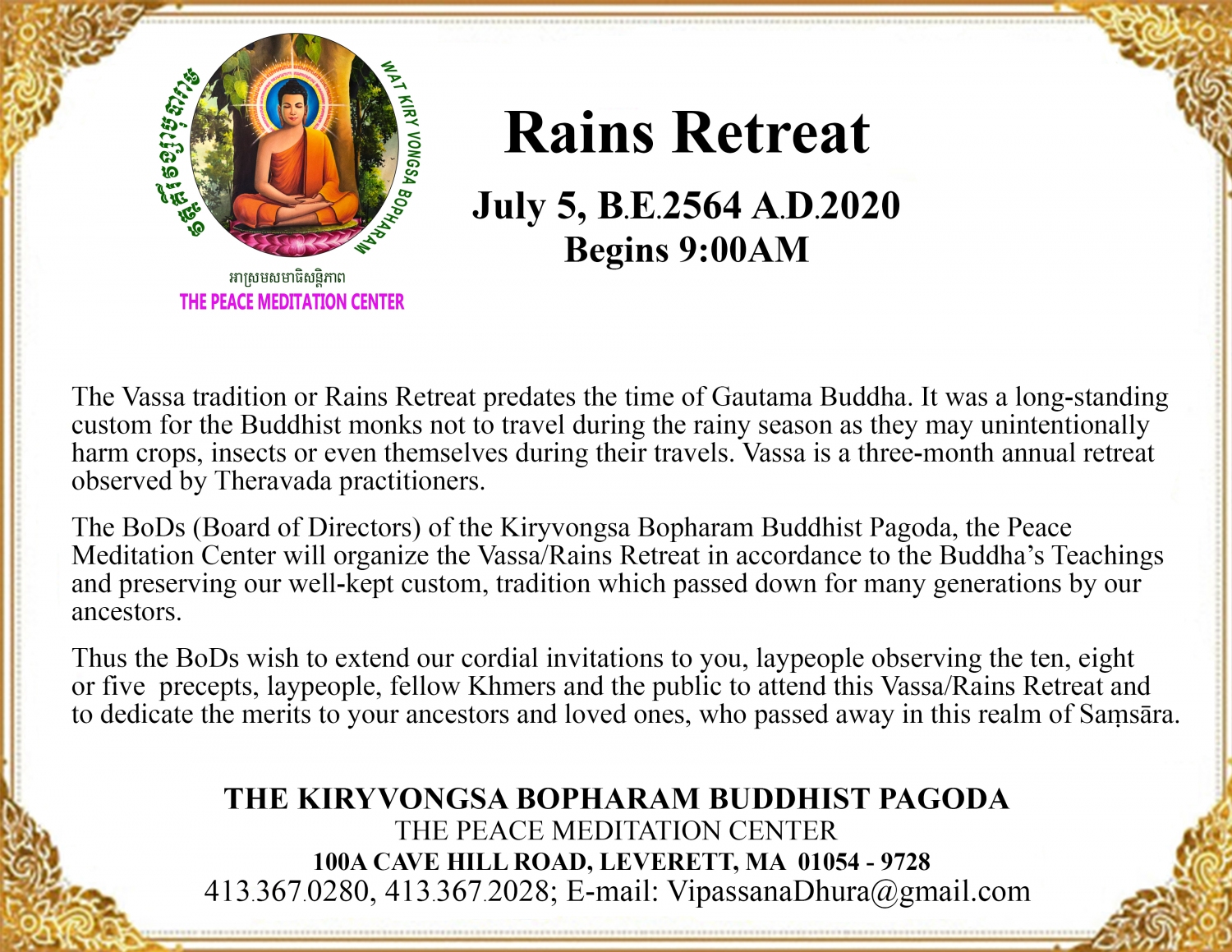
Vassa, Rains Retreats at the Kiryvongsa Bopharam, the Peace Meditation Center on July 5

By admin · Comments (0)
Sunday, June 14th, 2020

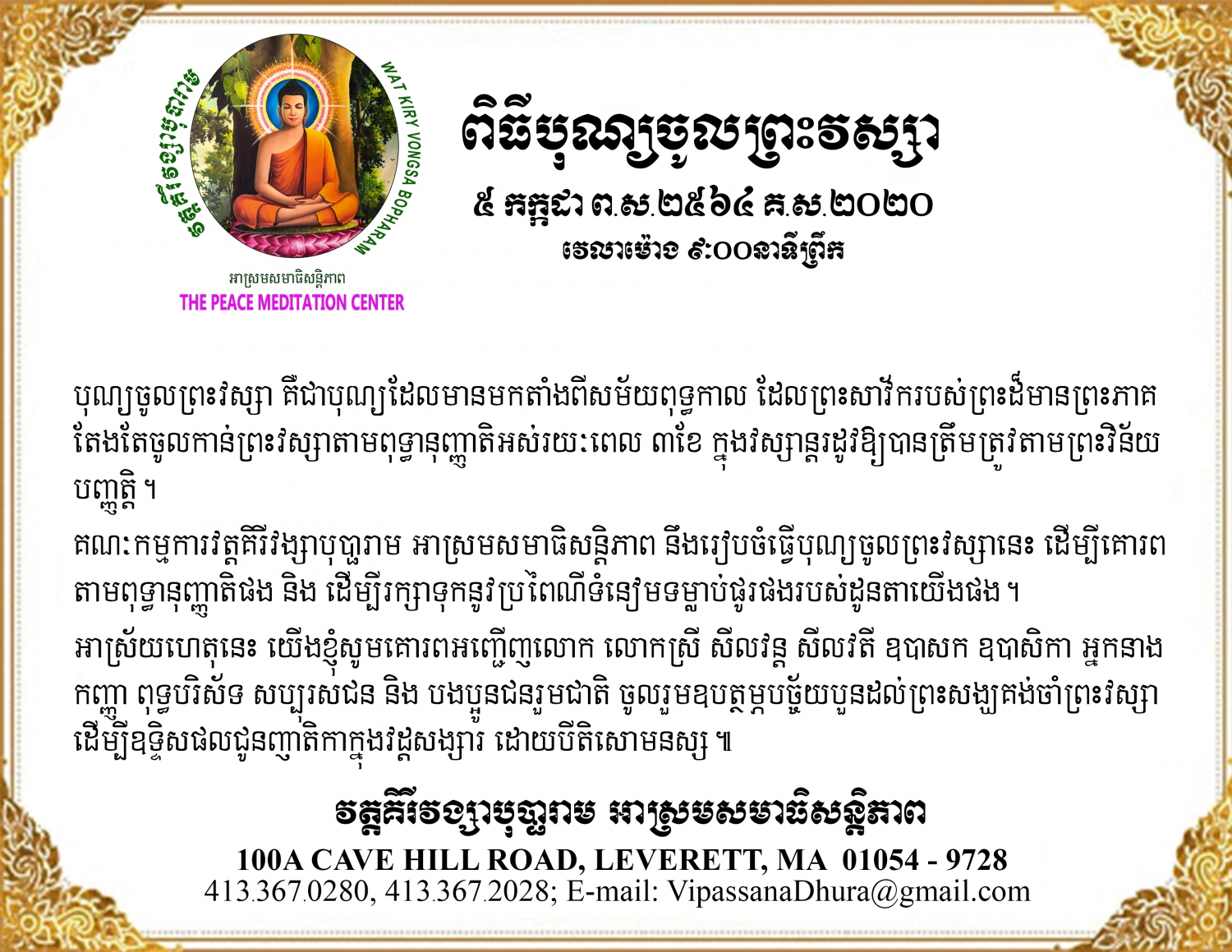
ពិធីបុណ្យចូលព្រះវស្សា ប្រារព្ធនៅវត្ដគិរីវង្សាបុប្ផារាម អាស្រមសមាធិសន្ដិភាព ថ្ងៃទី៥ ខែកក្កដា ព.ស.២៥៦៤ គ.ស.២០២០
Vassa, Rains Retreats at the Kiryvongsa Bopharam, the Peace Meditation Center on July 5, B.E.2564 A.D.2020
ថ្ងៃអាទិត្យ ៩រោច ខែជេស្ឋ ឆ្នាំជូត ទោស័ក ព.ស.២៥៦៤ ត្រូវនឹងថ្ងៃទី១៤ ខែមិថុនា គ.ស.២០២០
Sunday the 9th Waning Moon of Jeṭṭha B.E.2564 equivalent to​ June 14, A.D.2020 Year of the Rat
Comments (0)
Categories : Events

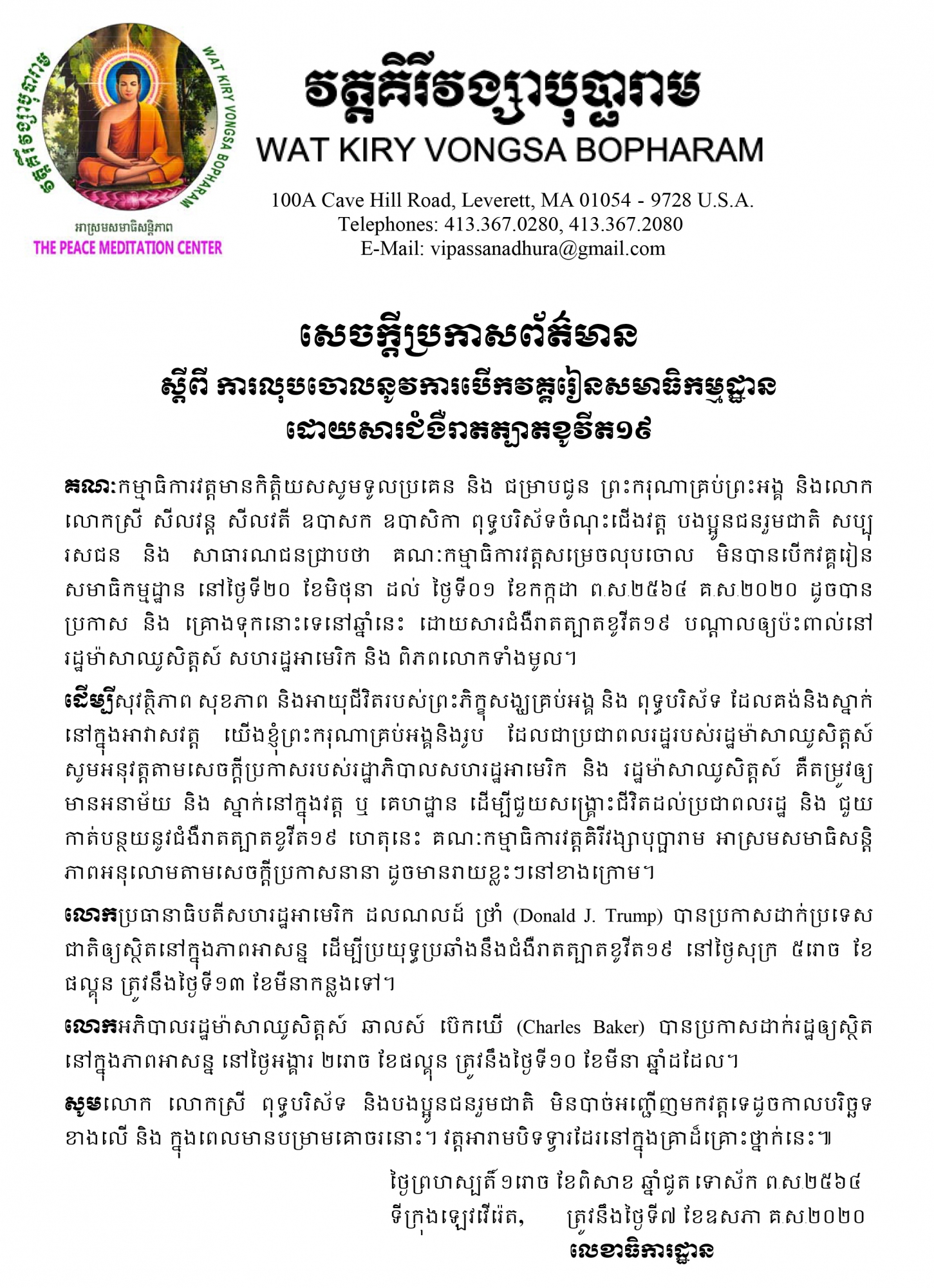
Press Release on the Cancellation of the June Meditation Retreats

By admin · Comments (0)
Tuesday, May 5th, 2020

សេចក្ដីប្រកាសព័ត៌មាន ស្ដីពី ការលុបចោលនូវការបើកវគ្គរៀនសមាធិកម្មដ្ឋាន ដោយសារជំងឺរាតត្បាតខូវីត១៩
English PDF: Press ReleaseEN || Khmer PDF: Press Release

Comments (0)
Categories : Events

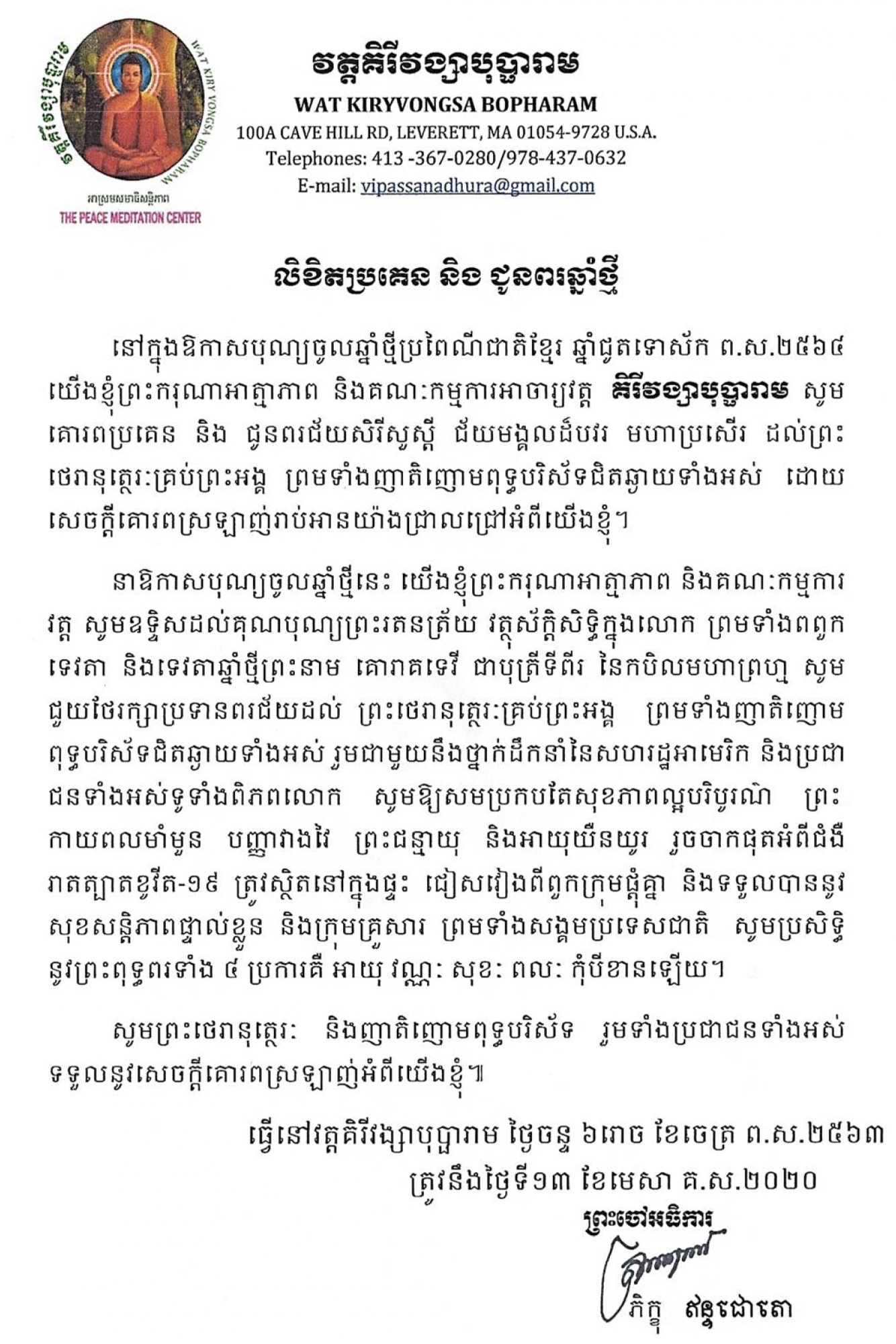
New Year Message from the Chief Monk of the Kiryvongsa Bopharam Pagoda

By admin · Comments (0)
Tuesday, April 14th, 2020

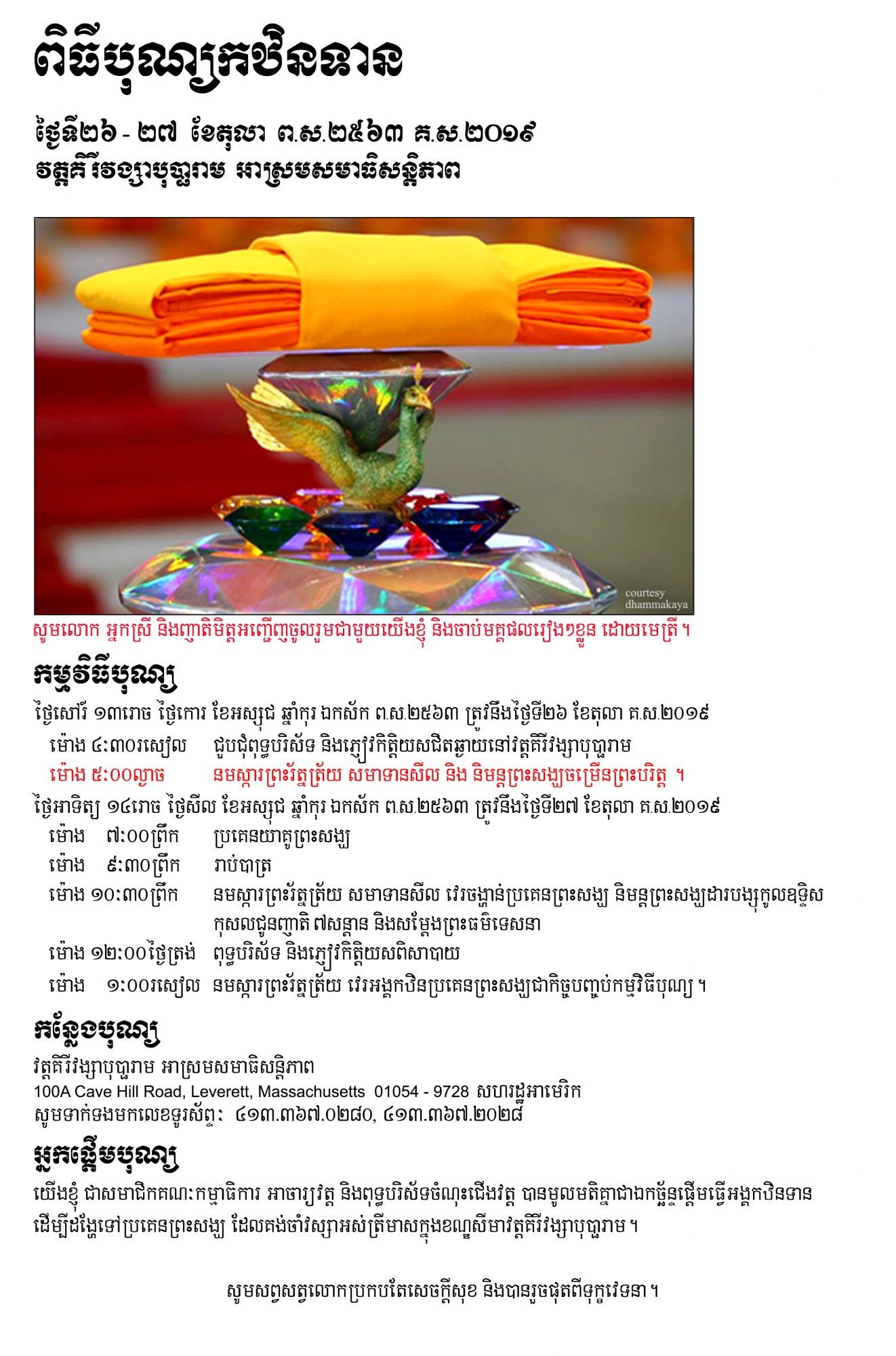
លិខិតប្រគេន និង ជូនពរឆ្នាំថ្មី របស់ព្រះចៅអធិការវត្ដគិរីវង្សាបុប្ផារាម
New Year Message from the Chief Monk of the Kiryvongsa Bopharam Pagoda
ថ្ងៃអង្គារ ៧រោច ខែចេត្រ ឆ្នាំជូត ទោស័ក ព.ស.២៥៦៣ ត្រូវនឹងថ្ងៃទី១៤ ខែមេសា គ.ស.២០២០
Tuesday the 7th Waning Moon of Citta B.E.2563 equivalent to April 14, A.D.2020 Year of the Rat
Comments (0)
Categories : Events

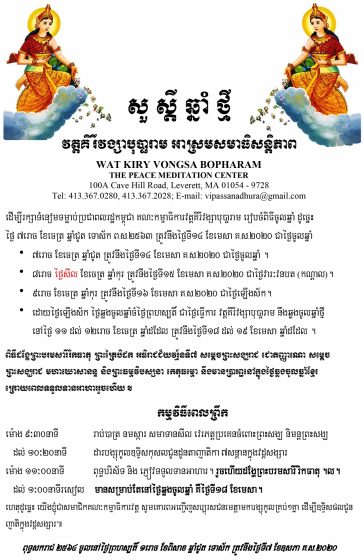
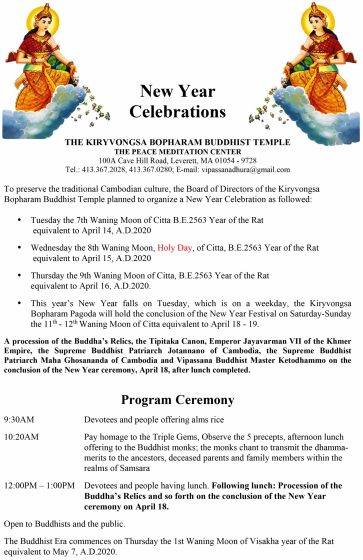
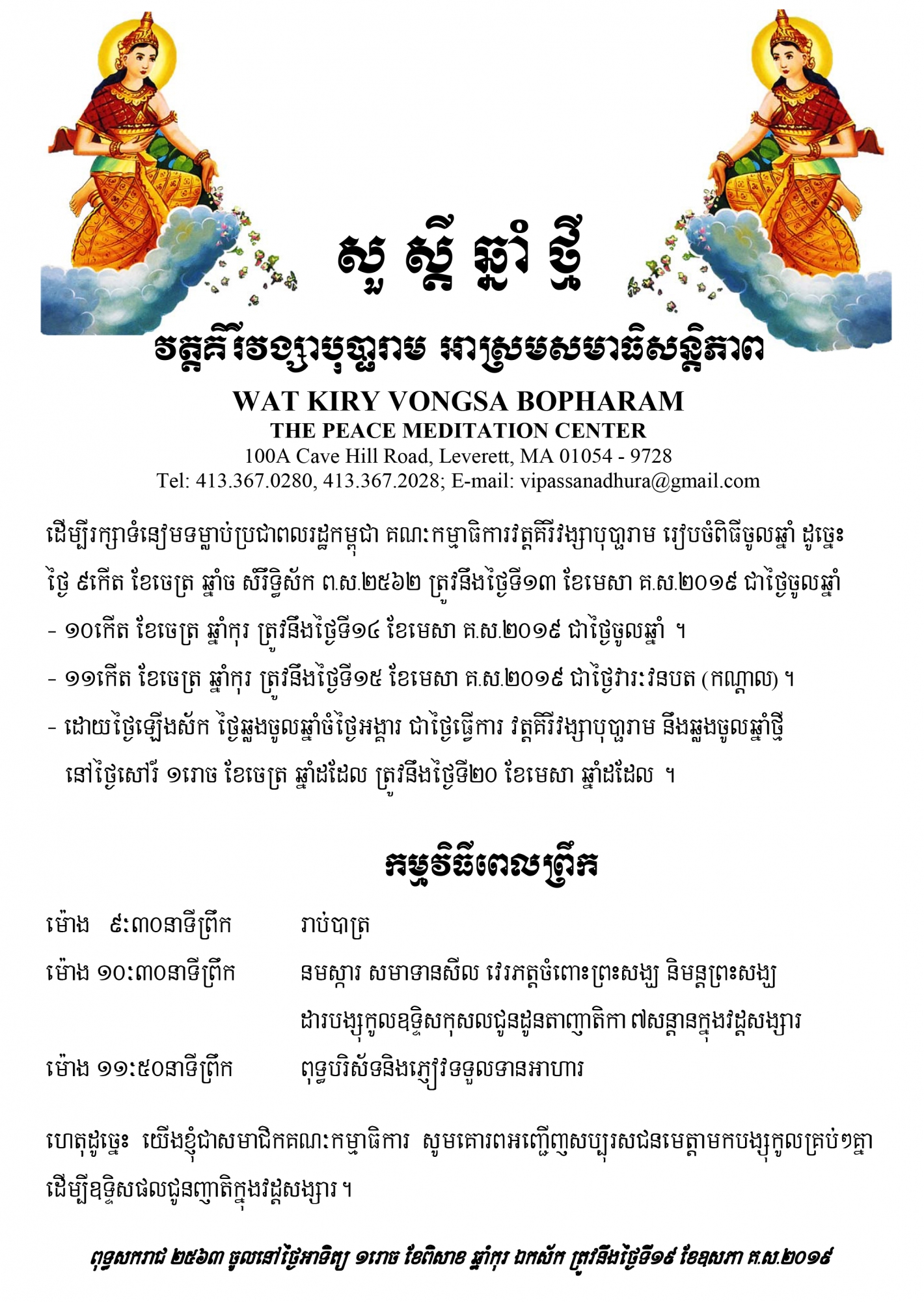
The Kiryvongsa Bopharam Pagoda celebrating New Year on April 14 – 19

By admin · Comments (0)
Saturday, February 22nd, 2020

វត្តគិរីវង្សាបុប្ផារាម ប្រារព្ធពិធីបុណ្យចូលឆ្នាំខ្មែរ នៅថ្ងៃទី១៤ – ១៩ មេសា

ថ្ងៃសៅរ៍ ១៤រោច ថ្ងៃសីល ខែមាឃ ឆ្នាំកុរ ឯកស័ក ព.ស.២៥៦៣ ត្រូវនឹងថ្ងៃទី២២ ខែកុម្ភៈ គ.ស.២០២០
Saturday the 14th Waning Moon, Holy Day, of Māgha B.E.2563 equivalent to February 22, A.D.2020 Year of the Pig

Comments (0)
Categories : Events

Māgha Pūjā at Wat Kiryvongsa Bopharam on FEB 8, 2563/2020

By admin · Comments (0)
Monday, December 23rd, 2019

វត្ដគិរីវង្សាបុប្ផារាម អាស្រមសមាធិសន្ដិភាព នឹងប្រារព្ធពិធីបុណ្យមាឃបូជា ថ្ងៃសៅរ៍ ១៥កើត ពេញបូណ៌មី ថ្ងៃសីល ឆ្នាំកុរ ឯកស័ក ព.ស.២៥៦៣ ត្រូវនឹងថ្ងៃទី៨ ខែកុម្ភៈ គ.ស.២០២០
The Kiryvongsa Bopharam Pagoda, the Peace Meditation Center to observe the Māgha Pūjā on Saturday the 15th Waxing Moon of Māgha, Day of Abstinence, B.E.2563 equivalent to February 8, A.D.2020.

Venue: The Kiryvongsa Bopharam Pagoda, the Peace Meditation Center
100A Cave Hill Road, Leverett, MA 01054 – 9728
Tel.: 413.367.0280, 413.367.2028

Background on មាឃបូជា Māgha Pūjā

Māgha Pūjā is the second most important Buddhist festival, celebrated on the full moon day of the third lunar month in Cambodia, Laos, Thailand, Sri Lanka and on the full moon day of Tabaung in Myanmar. It celebrates a gathering that was held between the Buddha and 1,250 of his first disciples, which, according to tradition, preceded the custom of periodic recitation of discipline by monks. On the day, Buddhists celebrate the creation of an ideal and exemplary community, which is why it is sometimes called Saṅgha Day, the Saṅgha referring to the Buddhist community, and for some Buddhist schools this is specifically the monastic community. In Thailand, the Pāli term Māgha-pūraṇamī is also used for the celebration, meaning ‘to honor on the full moon of the third lunar month’. Finally, some authors have also referred to the day as the Buddhist All Saints Day.

Celebration of Māgha Pūjā is first known of in the modern period, with the institution of it in Thailand, by King Rama IV (A.D.1804 – A.D.1868). It is a public holiday in many Southeast Asian countries and is an occasion when Buddhists go to the temple to perform merit-making activities, such as alms giving, meditation and listening to teachings. It has been proposed as a more spiritual alternative to the celebration of Valentine’s Day.

Māgha is derived from the name of the third month in the traditional Indian lunar calendar, on which the celebration is held. It is also the name of a star, which during this period is close to the full moon. Māgha Pūjā is held on the full moon day. In a leap year, the celebration will be postponed to the full moon day of the fourth lunar month.

Māgha Pūjā day marks an event occurring at the Veḷuvana grove, near Rājagaha (present Rajgir) in northern India, ten months after the enlightenment of the Buddha. The traditional story goes that a meeting is held in the afternoon, that has four characteristics:

1,250 disciples come to see the Buddha that evening without being summoned;​ These are mostly pupils from the Buddha’s recently converted disciples, such as the three Kassapa brothers, and the monks Sāriputta and Mogallāna.
All of them are Arahants, enlightened disciples;

All have been ordained by the Buddha himself, and therefore are his direct spiritual descendants;
It is the full-moon day of the third lunar month.

Because of these four factors, Māgha Pūjā is also known as the Fourfold Assembly Day. On this occasion, the Buddha teaches those arahants a summary of Buddhism, called the Ovādapatimokkha. In these, three principles are given:

“The non-doing of evil / the full performance of what is wholesome / the total purification of the mind.”

This is followed by a formulation of Buddhist ideals:

“Patience (and) forbearance are the highest austerity. The awakened ones say nibbāna is the highest. One is certainly not a wanderer if one injures others; one is not an ascetic if one harms another.”

Finally, the last stanza is about the path of religious practice:

“Not abusing, not injuring, and restraint under the rules of discipline, and knowing moderation in eating, and secluded lodgings, and exertion in respect of higher thought, this is the teaching of the awakened ones.”

According to the traditional Pāli commentaries, the Buddha continued to teach this summary for a period of twenty years, after which the custom was replaced by the recitation of the monastic code of discipline by the Saṅgha themselves. On Māgha Pūjā, Buddhists celebrate the creation of an ideal and exemplary community.

Māgha Pūjā is also the day that the Buddha is believed to have announced in Vesālī he would die in three months, after which a miraculous earthquake followed.​​​ Moreover, in Sri Lanka, it is considered the day that the Buddha appointed his two main disciples, the monks Sāriputta and Moggallāna. Apart from the religious meaning, Māgha Pūjā also reflects the Southeast Asian agricultural year, as it is celebrated after the harvest.

It is unknown how traditional Buddhist societies celebrated this event in pre-modern times, but in Thailand, the first known instance was during the reign of the Thai king Rama IV (1804–68), who instituted it. He first held it in the palace only. In the evening, 31 monks would recite the Ovādapatimokkha, lit lanterns around the ubosot (ordination hall), and give a sermon about the same Ovādapatimokkha. A recitation text used for this occasion is attributed to Rama IV. Rama IV’s successor Rama V (A.D.1853 – A.D.1910) expanded the practice and organized it as a national celebration in the Temple of the Emerald Buddha. From Thailand, the practice spread to neighboring countries.  Already in A.D. 1937, the ceremony was widely held and observed in Thailand.

Māgha Pūjā is a day that laypeople make merit. Monastics and devotees will hold processions, light candles, and make offerings. Māgha Pūjā is celebrated most extensively in Cambodia and Thailand, but it is a national holiday in most Southeast Asian countries, such as Laos, Myanmar and Cambodia.

In Thailand, Māgha Pūjā was instituted by Rama IV. It is currently designated as a national holiday, on which sale of alcohol is strictly prohibited. On the evening of Māgha Pūjā, most temples in Thailand hold a candlelight procession. Furthermore, people will make merit by going to temples and by joining in with activities, such as listening to teachings, giving alms, etc. At times, special events are also held, such as a recital of the entire Buddhist scriptures and ceremonies for avowing oneself as a Buddhist lay person. In A.D.2006, the government of Thailand made an announcement that Māgha Pūjā should be celebrated as a “national day of gratitude.” Māgha Pūja was therefore presented as a day of spiritual love and gratitude instead.

In Sri Lanka and Cambodia, Māgha Pūjā is also observed. In Chinese communities, as well as in Myanmar, a similar festival as Māgha Pūjā is observed. The Burmese people celebrate this on the full moon of the month Tabaung according to their traditional calendar. Fifteen days before this full moon day, a Shwedagon Pagoda Festival is held, on which a ceremony is held for offerings to the 28 Buddhas (from Taṇhaṅkara to Gotama Buddha), followed by a 10-day, continuous recital of Buddhist texts. Burmese devotees make merits and meditate during this period.

Māgha Pūjā has also become a popular event among Western Buddhist converts in the West.  Wikipedia

ផ្សាយនៅថ្ងៃចន្ទ ១២រោច ខែមិគសិរ ឆ្នាំកុរ ឯកស័ក ព.ស.២៥៦៣ ត្រូវនឹងថ្ងៃទី២៣ ខែធ្នូ គ.ស.២០១៩
Monday the 12th Waning Moon of Māgasira B.E.2563 equivalent to December 23, A.D.2019 Year of the Pig

Comments (0)
Categories : Events

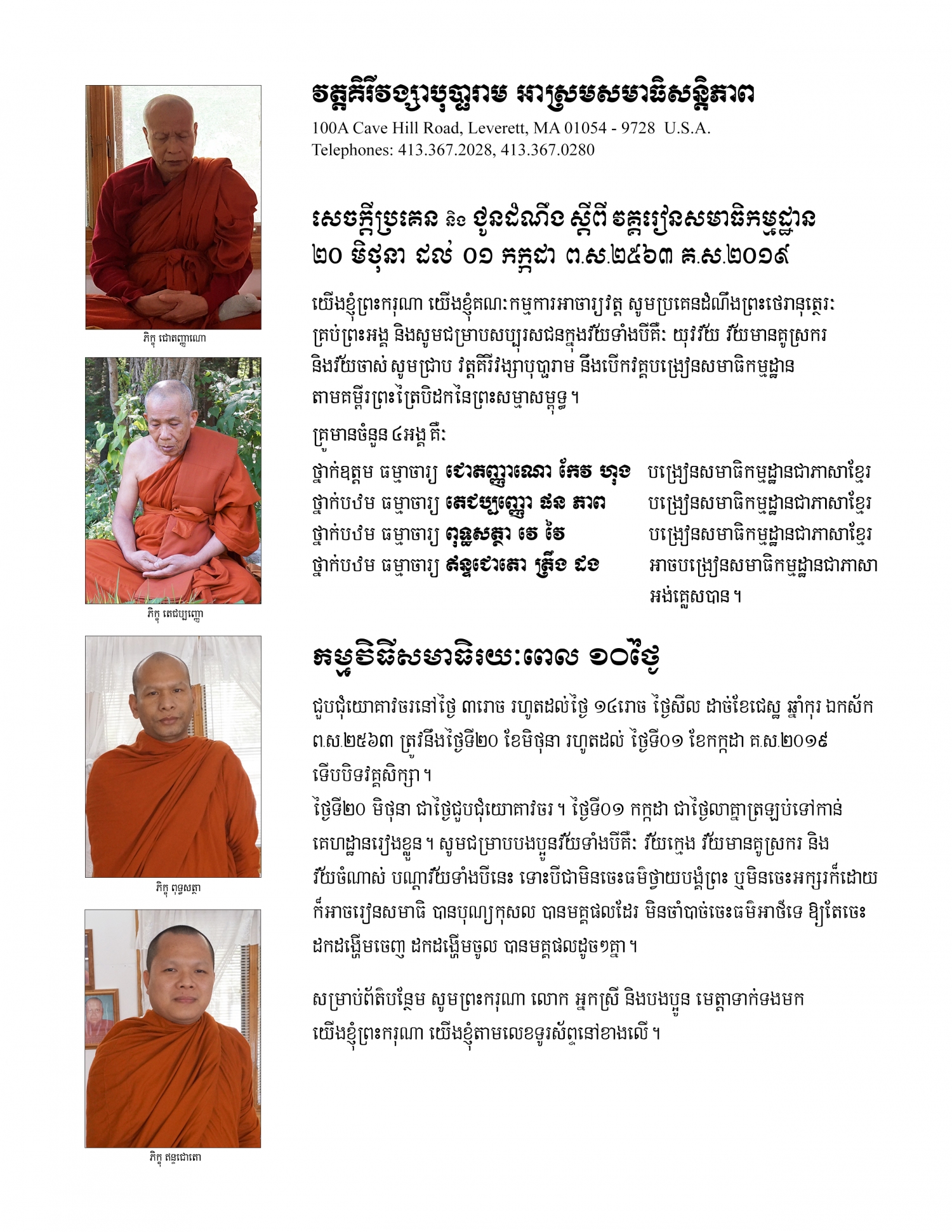
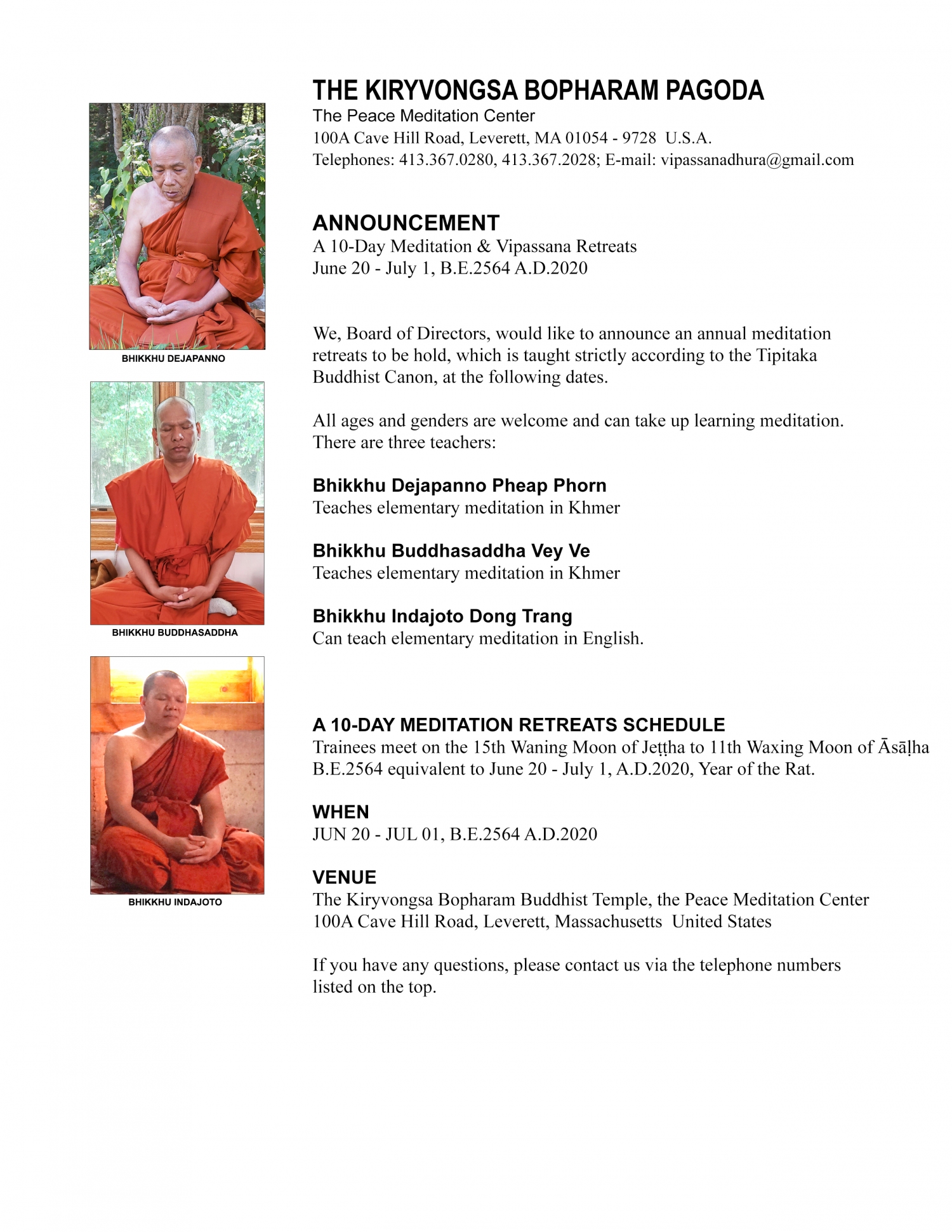
A 10-Day Meditation Retreats in Leverett, Massachusetts

By admin · Comments (0)
Thursday, December 12th, 2019

រៀនធ្វើសមាធិ វិបស្សនា និងអប់រំចិត្ត
INTERESTED IN LEARNING MEDITATION
A 10-Day Meditation (Samadhi) & Vipassana (Insight Meditation) Retreats

ថ្ងៃព្រហស្បតិ៍ ១រោច ខែមិគសិរ ឆ្នាំកុរ ឯកស័ក ព.ស.២៥៦៣ ត្រូវនឹងថ្ងៃទី១២ ខែធ្នូ គ.ស.២០១៩
Thursday the 1st Waning Moon of Māgasira B.E.2563, December 12, A.D.2019 Year of the Pig

When: JUN 20 – JUL 01, B.E.2564 A.D.2020

Location: The Kiryvongsa Bopharam Pagoda, the Peace Meditation Center, Leverett, Massachusetts United States

Vipassana and meditation teachers are: Bhikkhu Dejapanno, Bhikkhu Buddhasaddha, Bhikkhu Indajoto.

The meditation technique is taught strictly in accordance to the Buddhist Tipitaka (The Buddhist Canon).

To learn more about last year’s program. Click on hyperlink.

Modes of Transportation
By Air: You are suggested to stop at Bradley International Airport in Connecticut. It is a 1-hour drive to the temple.

By Land: You are suggested to stop in Amherst bus station if you arrive by bus from out of state or Canada. It is about a 25-minute drive to the temple.

Please DOWNLOAD PROGRAM and REGISTRATION FORM. Complete the registration form and send it back as soon as possible.

Download Khmer PDF: Registration2564
Download English PDF: RegistrationEN2564

Contact Info:
The Kiryvongsa Bopharam Pagoda, the Peace Meditation Center
100A Cave Hill Road, Leverett, MA 01054 – 9728 U.S.A.
Tel.: 413.367.0280, 413.367.2028

Advance ENROLLMENT opens

Comments (0)
Categories : Events, Vipassana Center

Wat KB celebrating Ancestors Memorial Ceremony on SEP 28 – 29

By admin · Comments (0)
Monday, August 19th, 2019

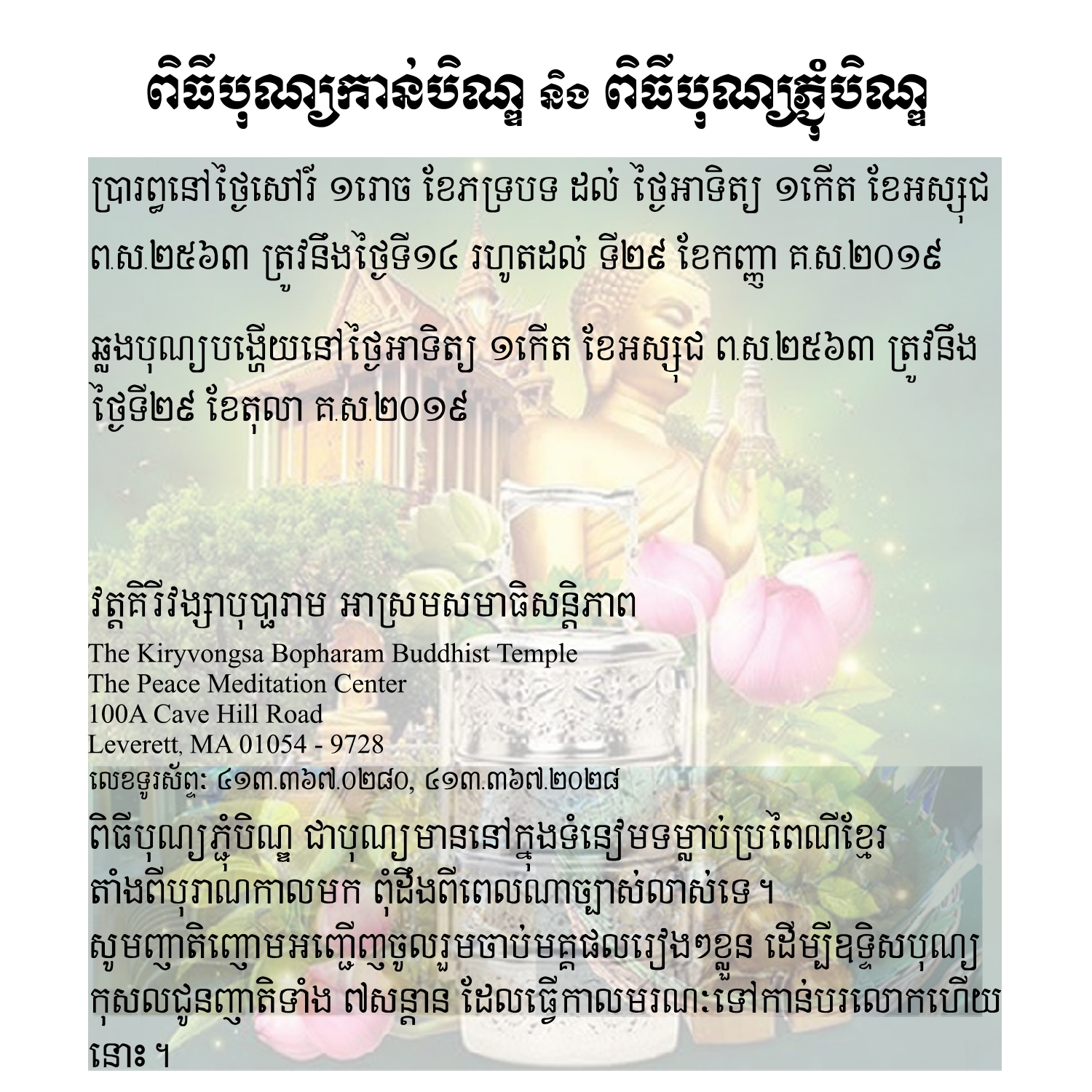
ពិធីបុណ្យកាន់បិណ្ឌ និងពិធីបុណ្យភ្ជុំបិណ្ឌ នឹងប្រារព្ធនៅថ្ងៃ ១រោច ខែភទ្របទ ដល់ថ្ងៃ ១កើត ខែអស្សុជ ព.ស.២៥៦៣ ត្រូវនឹងថ្ងៃទី១៤ ដល់ថ្ងៃទី២៩ ខែកញ្ញា គ.ស.២០១៩

ថ្ងៃចន្ទ ៤រោច ខែស្រាពណ៍ ឆ្នាំកុរ ឯកស័ក ព.ស.២៥៦៣ ត្រូវនឹងថ្ងៃទី១៩ ខែសីហា គ.ស.២០១៩
Monday 4th Waning Moon of Sāvaṇa B.E.2563, August 19, A.D.2019 Year of the Pig

វត្ដគិរីវង្សាបុប្ផារាម អាស្រមសមាធិសន្ដិភាព
The Kiryvongsa Bopharam Buddhist Temple
The Peace Meditation Center
100A Cave Hill Road
Leverett, MA 01054 – 9728
Tel.: 413.367.0280, 413.367.2028

Comments (0)
Categories : Events

Kathin at Kiryvongsa Bopharam Pagoda on OCT 26 – 27

By admin · Comments (0)
Sunday, August 4th, 2019

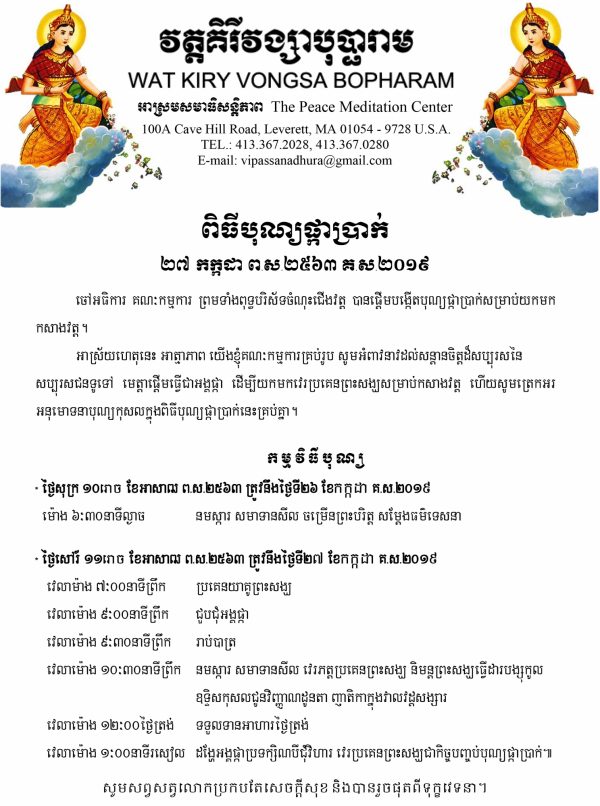
ពិធីបុណ្យកឋិន នៅវត្ដគិរីវង្សាបុប្ផារាម ថ្ងៃទី២៦ – ២៧ តុលា
Kathin to be held at the Kiryvongsa Bopharam Pagoda on Saturday – Sunday October the 13th – 14th Waxing Moon of Assayuja B.E.2563 equivalent to October 26 – 27,  A.D.2019 កន្លែងៈ វត្ដគិរីវង្សាបុប្ផារាម អាស្រមសមាធិសន្ដិភាព Wat Kiryvongsa Bopharam, the Peace Meditation Center
100A Cave Hill Road, Leverett, MA 01054 – 9728
លេខទូរស័ព្ទៈ ៤១៣.៣៦៧.០២៨០, ៤១៣.៣៦៧.២០២៨
413.367.0280, 413.367.2028

អំពីពិធីបុណ្យកឋិនទានសង្ខេប
Brief Kathin History
ដើម្បីធ្វើបុណ្យកឋិនឲ្យបានត្រឹមត្រូវតាមពុទ្ធានុញ្ញាត ពុទ្ធបរិស័ទត្រូវប្រព្រឹត្ដដូចតទៅ៖
១. វត្ដអារាមត្រូវតែបានបញ្ចុះពុទ្ធសីមារួចរាល់ហើយមុនពេលប្រារព្ធពិធីបុណ្យកឋិន។
២. ព្រះភិក្ខុ ដែលជាអ្នកក្រាលគ្រង ត្រូវបានគង់ចាំវស្សាអស់កាលត្រីមាសគម្រប់ ៣ខែ ក្នុងរដូវវស្ នៅក្នុងពុទ្ធសីមានៃវត្ដអារាម ដែលពុទ្ធបរិស័ទដង្ហែអង្គកឋិនចូលទៅប្រគេននោះ។
៣. សាមណេរមិនអាចក្រាលគ្រងកឋិនបានទេ។ សាមណេរទទួលបានកឋិនតាមរយៈព្រះភិក្ខុ អ្នកក្រាលគ្រង។
៤. ភិក្ខុដាច់ត្រៃសរណគមន៍៖ ភិក្ខុមិនយកព្រះពុទ្ធ ព្រះធម៌ ព្រះសង្ឃ ជាទីពឹងទីរព្ញក គឺភិក្ខុចងខ្សែអំបោះក្រហម អំបោះស ស្រោចទឹក ប្រោះទឹក ធ្វើគ្រូទាយ ធ្វើគ្រូមន្ដអាគមអូមអាម ធ្វើពិធីក្រុងពាលី បោះបាយបិណ្ឌ រៀបបាយសី ភិក្ខុយកវត្ថុដទៃជាទីពឹងទីរព្ញក​ (យកអបិយជំនឿមកដាក់ក្នុងខ្លួន) យកវត្ថុខាងក្រៅពីពុទ្ធសាសនាមកជាទីពឹងទីរព្ញក ។ល។ និយាយឲ្យខ្លី គឺភិក្ខុដែលមិនប្រតិបត្ដិតាមសេចក្ដីប្រៀនប្រដៅនៃព្រះសម្មាសម្ពុទ្ធ គឺធ្វើកឋិនមិនបានអានិសង្សកឋិនទេ គឺបានត្រឹមតែបច្ច័យបួន។
៥. ភិក្ខុបរាជិក គឺភិក្ខុដាច់ត្រៃសរណគមន៍ ដាច់សីលអស់ហើយ ធ្វើកឋិនមិនបានអានិសង្សកឋិនទេ។
៦. បដិគ្គាហកៈ ឬព្រះភិក្ខុ ដែលជាអ្នកក្រាលគ្រង មានសេរីភាពក្នុងខ្លួនចាប់តាំងពីបានក្រាលអនុមោទនាកឋិនពេលណាមក តែងបាននូវអានិសង្ស ៥យ៉ាងគឺ៖
ក. អនាមន្ដចារោ — ត្រាច់ (និមន្ដ) ទៅណាមិនបាច់លាភិក្ខុផងគ្នា
ខ. អសមាទានចារោ — ត្រាច់ (និមន្ដ) ទៅណាមិនបាច់យកត្រៃចីវរគ្រប់ប្រដាប់ អាចដាក់ទុកនៅកន្លែងបាន
គ. ភិក្ខុឆាន់គណភោជន និងបរមប្បរភោជនបាន
ឃ. យាវទត្ថចីវរំ — ភិក្ខុទុកដាក់អតិរេកចីវរបានតាមប្រាថ្នា
ង. យោ ច តត្ថចីវរុប្បាទោស សោ នេសំ ភវិស្សតិ — អានិសង្សលាភ ដែលកើតឡើងក្នុងទីនោះ ត្រូវបានតែភិក្ខុ ដែលគង់នៅក្នុងអាវាសនោះ។

ទាយក ទាយិកាក៏បានអានិស្សដ៏ក្រៃលែងច្រើនជាអនេកប្បការ ដូចជាស្លាប់ពីលោកនេះទៅៗកើតសុគតិភព លុះចុតិ (ស្លាប់) ពីសុគគិភពមកឋានមនុស្ស បានជាស្ដេចចក្រពត្ដិគ្រប់គ្រងទ្វីបទាំងបួន អស់បុណ្យពីស្ដេចចក្រពត្ដិមកកើតស្ដេចតូចៗ អស់ពីស្ដេចតូចៗមកកើតជាសេដ្ឋីគហបតី អស់ពីគហបតីមកកើតកូនអ្នកមាន កូនអ្នកក្រមិនកើតទេ នេះជាអានិសង្ស ដែលអ្នកធ្វើកឋិន ត្រូវបានអានិសង្សនេះឯង ហៅថា នាមធម៌។

វត្ថុ ឬរបស់ដែលធ្វើឲ្យកើតជាកឋិនមានបី៖ ស្បង់មួយ ចីពរមួយ សង្ឃាដីមួយ ទាំងបីនេះហៅថា ត្រៃ។ វត្ថុឬរបស់ក្រៅពីត្រៃមាន៖ បាត្រ ឆត្រ កន្ទេល ខ្នើយ ព្រំ គ្រែ តុ ទូ កៅអី ហៅថា បរិក្ខាររបស់កឋិន ស្បង់ ចីពរ សង្ឃាដី យកតែស្បង់មួយធ្វើកឋិនក៏បាន។

កឋិនធ្វើកម្របានត្រឹមត្រូវតាមវិន័យបញ្ញត្ដិណាស់ ប្រសិនបើផ្នែកឧបាសក ឧបាសិកា កាត់ស្បង់ចីពរត្រឹមត្រូវតាមវិន័យបញ្ញត្ដិ ហើយបដិគ្គាហកៈក្រាលគ្រងបានត្រឹមត្រូវតាមវិន័យបញ្ញត្ដិ កឋិននេះឈ្មោះថា បានអានិសង្សទាំងអ្នកទទួល ទាំងអ្នកឲ្យ។

ប្រសិនបើទាយក ទាយិកា កាត់ស្បង់ចីពរបានត្រឹមត្រូវយកធ្វើកឋិន ប៉ុន្ដែបដិគ្គាហកៈ ភិក្ខុអ្នកក្រាលគ្រងមិនបានត្រឹមត្រូវ កឋិននេះមិនបានកើតជាកឋិន ក្លាយជាបុណ្យបច្ច័យបួន អានិសង្សមិនបានដល់ភិក្ខុអ្នកក្រាលគ្រងទេ បានតែទាយក ទាយិកា អ្នកឲ្យ។

បុណ្យទាំងអស់ក្នុងព្រះពុទ្ធសាសនា អានិសង្សដែលត្រូវបាន គឺបានតែទាយក ទាយិកា ឧបាសក ឧបាសិកា ជាអ្នកឲ្យទេ អ្នកទទួលមិនបានអានិសង្សទេ។

ដោយឡែកប្លែកតែពិធីបុណ្យកឋិន ព្រោះបុណ្យកឋិនបានទាំងសងខាង គឺអ្នកឲ្យក៏បានអានិសង្ស អ្នកទទួលក៏បានអានិសង្ស។

ការធ្វើកឋិនមិនបានត្រឹមត្រូវតាមវិន័យបញ្ញត្ដិជាវិបត្ដិយ៉ាងធ្ងន់ចំពោះភិក្ខុអ្នកក្រាលគ្រង និងអ្នកអនុមោទនា។ ឯទាយក ទាយិកា ឧបាសក ឧបាសិកា អ្នកឲ្យមិនមានវិបត្ដិអ្វីឡើយ គ្រាន់តែមិនបានអានិសង្សកឋិន ត្រឡប់ទៅជាបានអានិសង្សបច្ច័យបួនវិញ។

វិបត្ដិភិក្ខុ គឺសម្គាល់ថា បានក្រាលគ្រង និងអនុមោទនាកឋិនរួចហើយ៖
១.ទុកសង្ឃាដីនៅកន្លែងនិមន្ដទៅកាន់ទីកន្លែងផ្សេងៗ
២. ទុកអតិរេកចីវរឲ្យលើសពី ១០ថ្ងៃ
៣. ឆាន់គណភោជន និងបរមប្បរភោជនព្រមគ្នា និមន្ដទៅណាមិនបានប្រាប់ភិក្ខុផងគ្នាអស់រយៈពេល ៥ខែសម្គាល់ថា អានិសង្សកឋិន ដែលត្រូវបាន។

ចុះប្រសិនបើធ្វើកឋិនមិនត្រូវតាមវិន័យបញ្ញត្ដិ ហើយអ្នកក្រាលគ្រងកឋិនក៏មិនត្រឹមត្រូវជាវិបត្ដិដល់ភិក្ខុ អស់រយៈពេល ៥ខែ ចាប់ពីថ្ងៃ ១រោច ខែអស្សុជ ដល់ថ្ងៃពេញបូណ៌មី ខែផល្គុន ចំពោះភិក្ខុ ដែលក្រាលគ្រងកឋិនមិនត្រឹមត្រូវតាមវិន័យនោះ គឺភិក្ខុអ្នកក្រាលគ្រងមិនចេះ ឬមិនយល់នូវអានិសង្ស ៥ មិនយល់ មិនដឹងនូវមាតិកា ៨ បលិពោធ ២ ក៏មិនយល់ អនត្ថតាការ ២៤ ក៏មិនដឹង មិនយល់ អត្ថតាការ ១៧ ក៏មិនយល់ មិនដឹង។ ភិក្ខុអ្នកក្រាលគ្រងកឋិន ប្រសិនបើមិនយល់ មិនដឹងនូវលក្ខណៈ ៥ចំណុចនេះ ប្រសិនបើក្រាលគ្រងកឋិនៗនោះមិនកើតជាកឋិនទេ កឋិនក្លាយទៅជាបច្ច័យបួនពិតប្រាកដ។

ដូច្នេះហើយបានជាលោកអ្នកប្រាជ្ញទាំងឡាយបានប្រៀបធៀបការធ្វើកឋិនទៅនឹងឈើស្នឹង ឈើស្នឹងគឺជាឈើដែលគេកាត់ដាច់ពាក់កណ្ដាលដើម ហើយគេយកចំណែកខាងចុងទៅដោតវានឹងផែនដី ឈើនោះកម្រនឹងបានដុះលូតលាស់។ យ៉ាងណាមិញ រីឯពិធីបុណ្យកឋិនក្រធ្វើឲ្យបានត្រឹមត្រូវតាមវិន័យបញ្ញត្ដិ ក៏យ៉ាងនោះដែរ។

រៀបរៀងដោយព្រះភិក្ខុ តេជប្បញ្ញោ ព្រះធម្មាចារ្យវិបស្សនាធុរៈ និងជាព្រះចៅអធិការវត្ដគិរីវង្សាបុប្ផារាម
ខែមិគសិរ ព.ស.២៦៥៤ ខែធ្នូ គ.ស.២០១០

Read More→

Comments (0)
Categories : Events

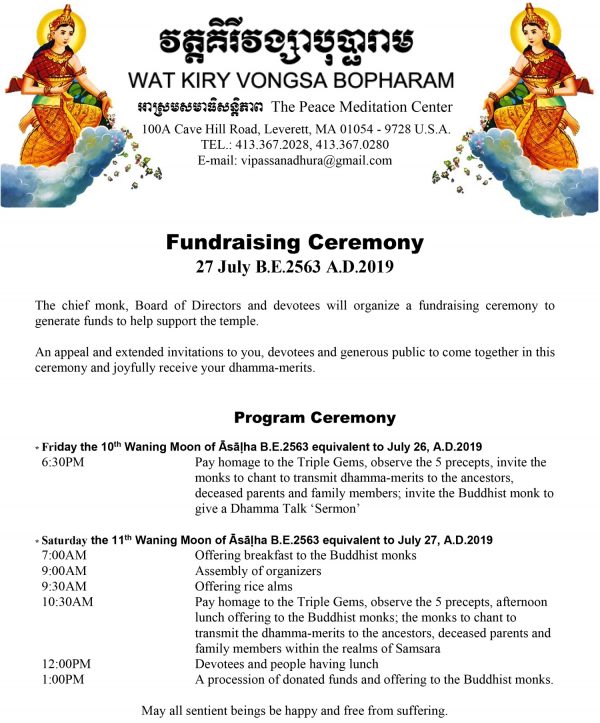
Fundraising Ceremony on July 27, B.E.2563 A.D.2019

By admin · Comments (0)
Wednesday, July 17th, 2019

ពិធីបុណ្យផ្កាប្រាក់  Fundraising Ceremony on July 27, B.E.2563 A.D.2019

Comments (0)
Categories : Events

Visakha Puja at Wat Kiryvongsa Bopharam on May 18

By admin · Comments (0)
Wednesday, April 24th, 2019

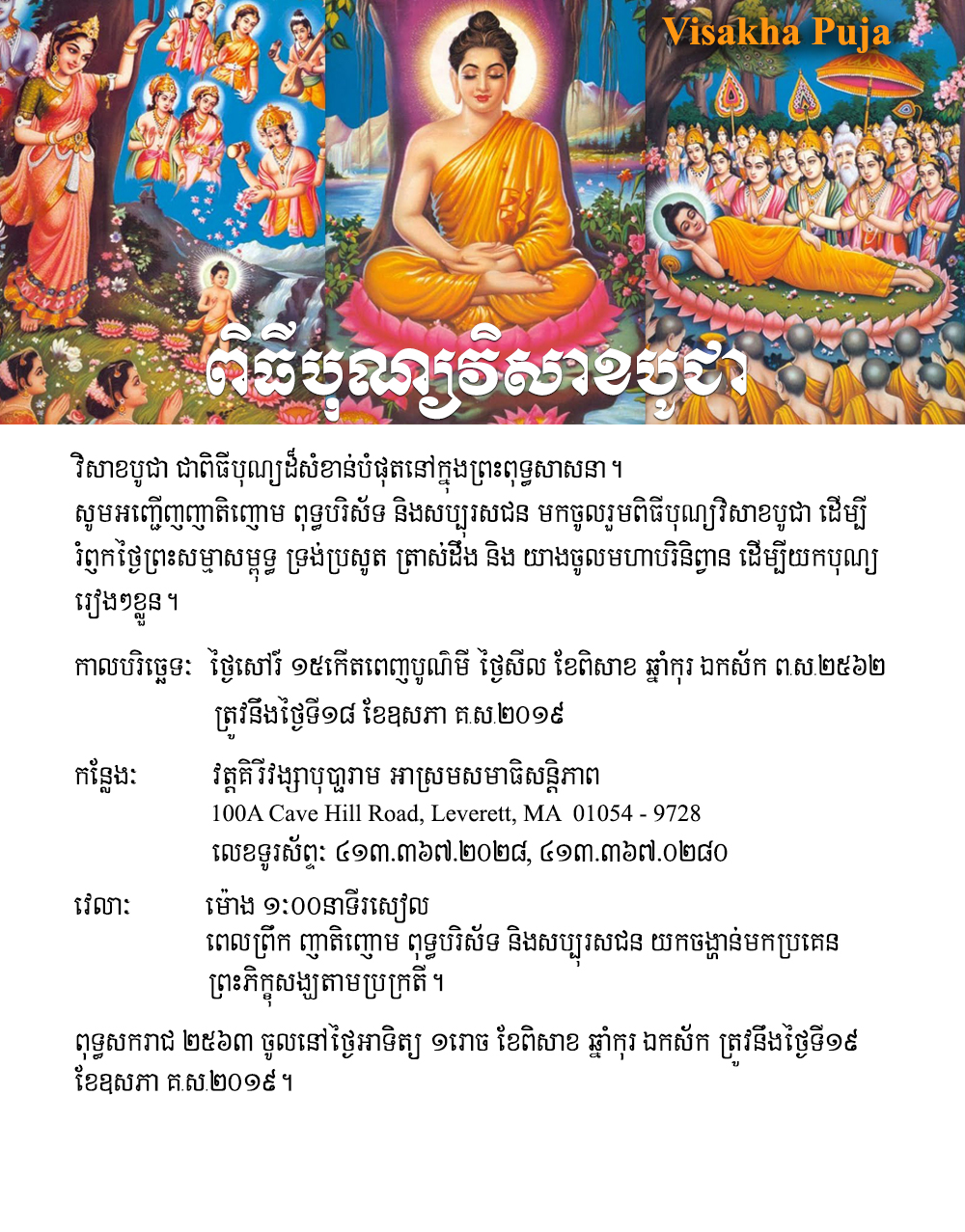
ពិធីបុណ្យវិសាខបូជា ប្រារព្ធនៅវត្ដគិរីវង្សាបុប្ផារាម អាស្រមសមាធិសន្ដិភាព ថ្ងៃទី១៨ ខែឧសភា
Saturday the 15th Waxing Moon of Visakha B.E.2562, May 18, A.D.2019 Year of the Pig


Read More→

Comments (0)
Categories : Events

Wat Kiryvongsa Bopharam celebrating Khmer New Year on APR 13 – 14, 20

By admin · Comments (0)
Sunday, March 31st, 2019

វត្តគិរីវង្សាបុប្ផារាម អាស្រមសមាធិសន្ដិភាព ប្រារព្ធពិធីបុណ្យចូលឆ្នាំខ្មែរ នៅថ្ងៃ ៩ ដល់ ១០កើត និង ១រោច ខែចេត្រ ព.ស.២៥៦២ ត្រូវនឹងថ្ងៃទី១៣ – ១៤ និង ២០ មេសា ខាងមុខ។
The Kiryvongsa Bopharam, the Peace Meditation Center celebrating Khmer New Year on Saturday-Sunday the 9th – 10th Waxing and 1st Waning Moon of Citta, B.E.2562 equivalent to April 13 – 14 and 20.

Read More→

Comments (0)
Categories : Events

Wat Kiryvongsa Bopharam celebrating Khmer New Year on APR 13 – 14, 20

By admin · Comments (0)
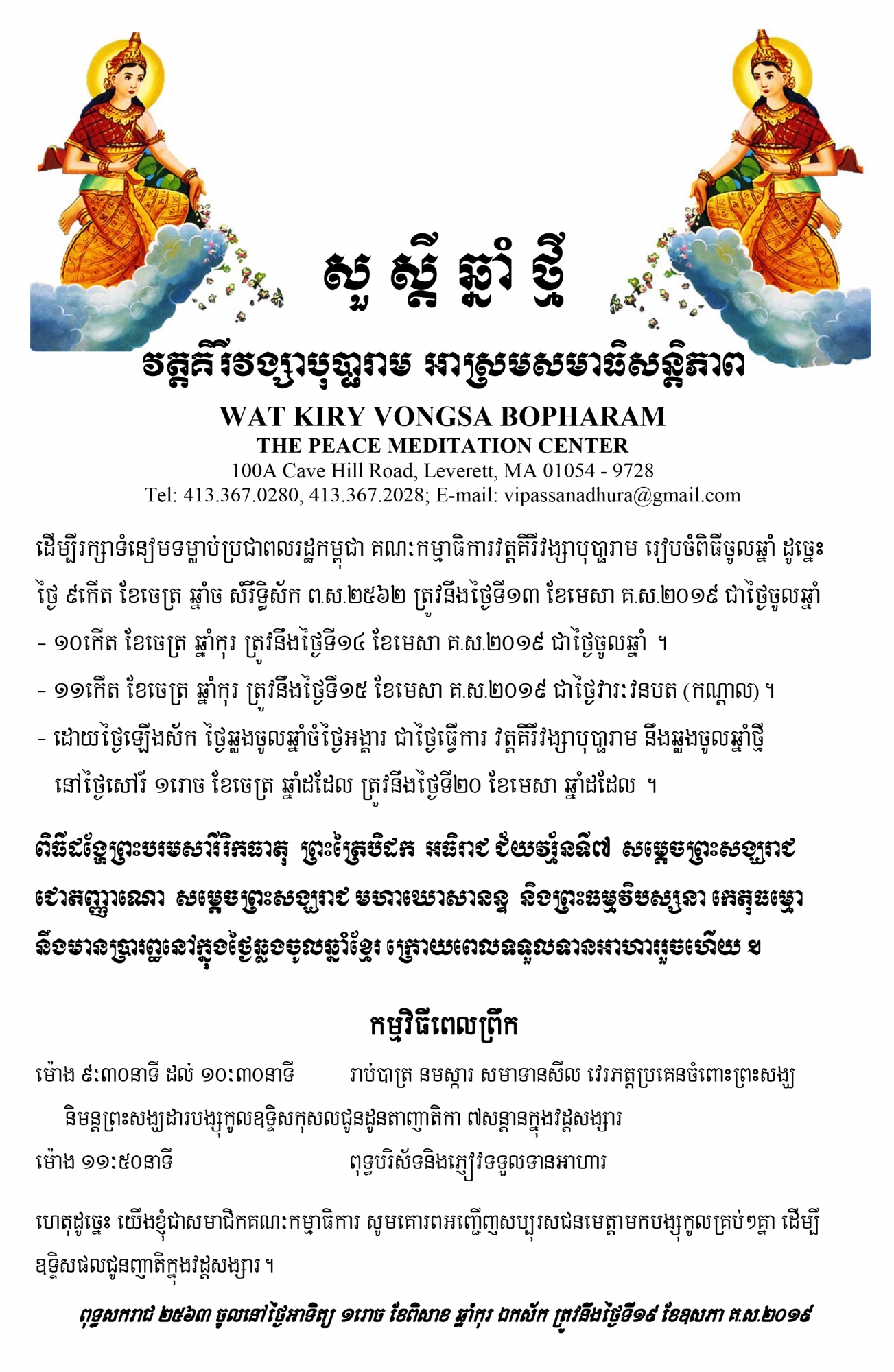
Wednesday, February 20th, 2019

វត្តគិរីវង្សាបុប្ផារាម អាស្រមសមាធិសន្ដិភាព ប្រារព្ធពិធីបុណ្យចូលឆ្នាំខ្មែរ នៅថ្ងៃ ៩ ដល់ ១០កើត និង ១រោច ខែចេត្រ ព.ស.២៥៦២ ត្រូវនឹងថ្ងៃទី១៣ – ១៤ និង ២០ មេសា ខាងមុខ។
The Kiryvongsa Bopharam, the Peace Meditation Center celebrating Khmer New Year on Saturday-Sunday the 9th – 10th Waxing and 1st Waning Moon of Citta, B.E.2562 equivalent to April 13 – 14 and 20.
Read More→

Comments (0)
Categories : Events

A 10-Day Meditation Retreats in Leverett, Massachusetts

By admin · Comments (0)
Saturday, January 26th, 2019

រៀនធ្វើសមាធិ វិបស្សនា និងអប់រំចិត្ត
INTERESTED IN LEARNING MEDITATION
A 10-Day Meditation (Samadhi) & Vipassana (Insight Meditation) Retreats

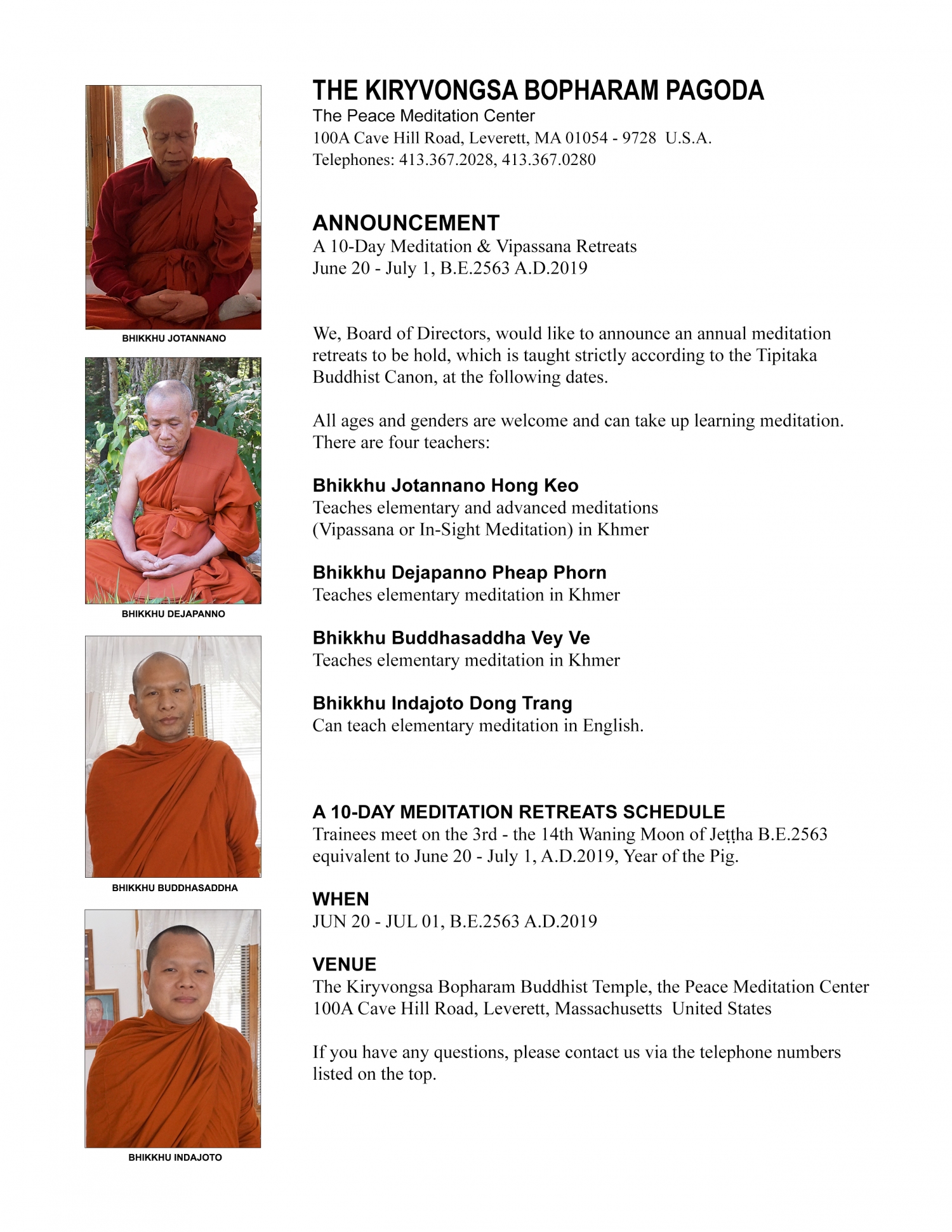
When: JUN 20 – JUL 01, B.E.2563 A.D.2019

Location: The Kiryvongsa Bopharam Pagoda, the Peace Meditation Center, Leverett, Massachusetts United StatesVipassana and meditation teachers are: Bhikkhu Jotannano, Bhikkhu Dejapanno, Bhikkhu Buddhasaddha, Bhikkhu Indajoto.

The meditation technique is taught strictly in accordance to the Buddhist Tipitaka (The Buddhist Canon).

To learn more about last year’s program. Click on hyperlink.Modes of Transportation
By Air: You are suggested to stop at Bradley International Airport in Connecticut. It is a 1-hour drive to the temple.

By Land: You are suggested to stop in Amherst bus station if you arrive by bus from out of state or Canada. It is about a 25-minute drive to the temple.

Please DOWNLOAD PROGRAM and REGISTRATION FORM. Complete the registration form and send it back as soon as possible.

Download Khmer PDF: Registration2563
Download English PDF: RegistrationEN2563

Contact Info:
The Kiryvongsa Bopharam Pagoda, the Peace Meditation Center
100A Cave Hill Road, Leverett, MA 01054 – 9728 U.S.A.
Tel.: 413.367.2028, 413.367.0280

Advance ENROLLMENT opens

Comments (0)
Categories : Events, Vipassana Center

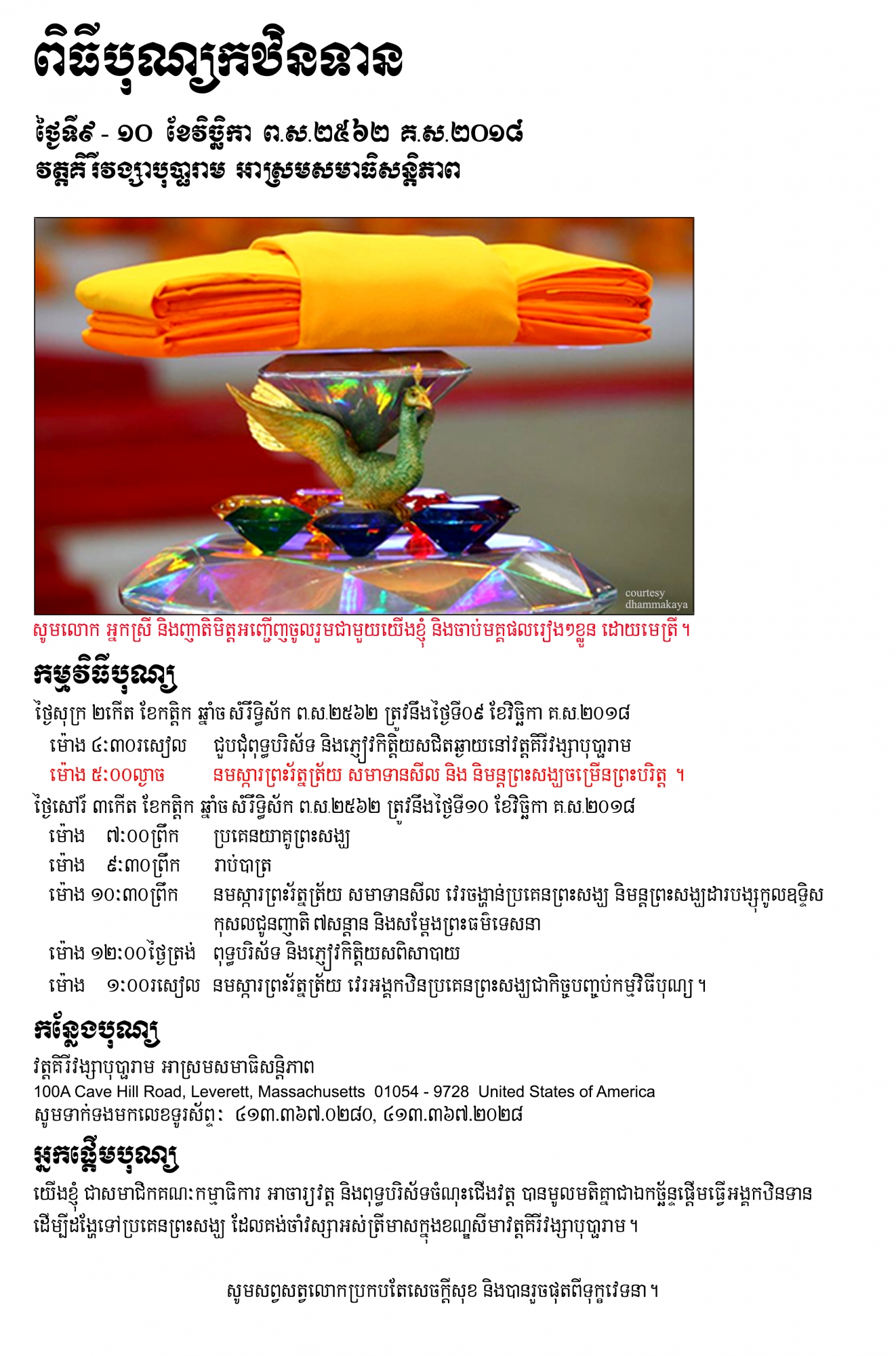
Wat KB celebrating Kathin on NOV 9 – 10

By admin · Comments (0)
Sunday, October 14th, 2018


Read More→

Comments (0)
Categories : Events

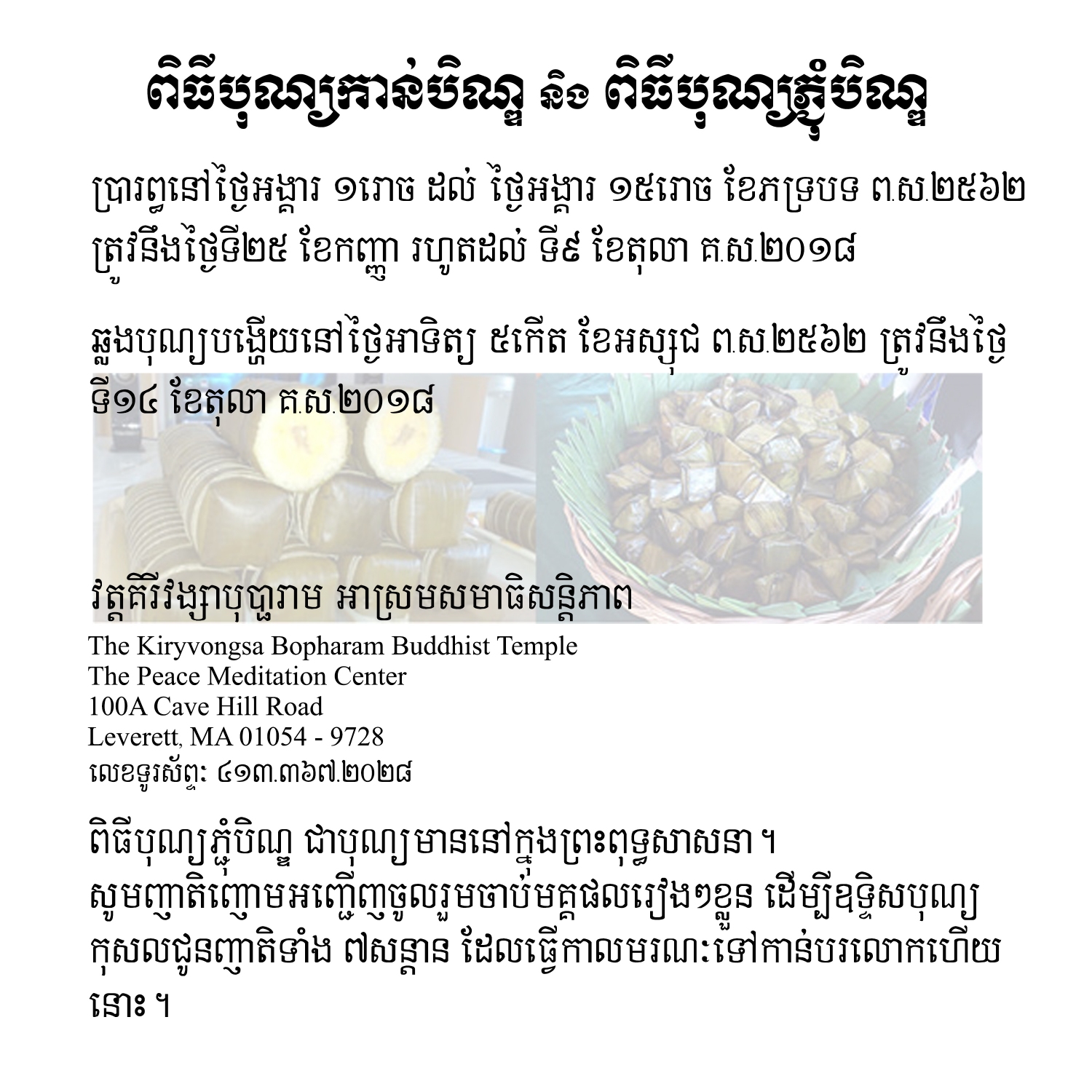
Wat KB celebrating Ancestors Memorial Ceremony on OCT 13 – 14

By admin · Comments (0)
Wednesday, September 5th, 2018

ពិធីបុណ្យកាន់បិណ្ឌ និងពិធីបុណ្យភ្ជុំបិណ្ឌ
ថ្ងៃពុធ ១០រោច ខែស្រាពណ៍ ឆ្នាំច សំរឹទ្ធិស័ក ព.ស.២៥៦២ ត្រូវនឹងថ្ងៃទី០៥ ខែកញ្ញា គ.ស.២០១៨
Wednesday the 10th Waning Moon of Sāvaṇa B.E.2562, September 5, A.D.2018 Year of the Dog

វត្ដគិរីវង្សាបុប្ផារាម អាស្រមសមាធិសន្ដិភាព
The Kiryvongsa Bopharam Buddhist Temple
The Peace Meditation Center
100A Cave Hill Road
Leverett, MA 01054 – 9728
Tel.: 413.367.2028

Comments (0)
Categories : Events

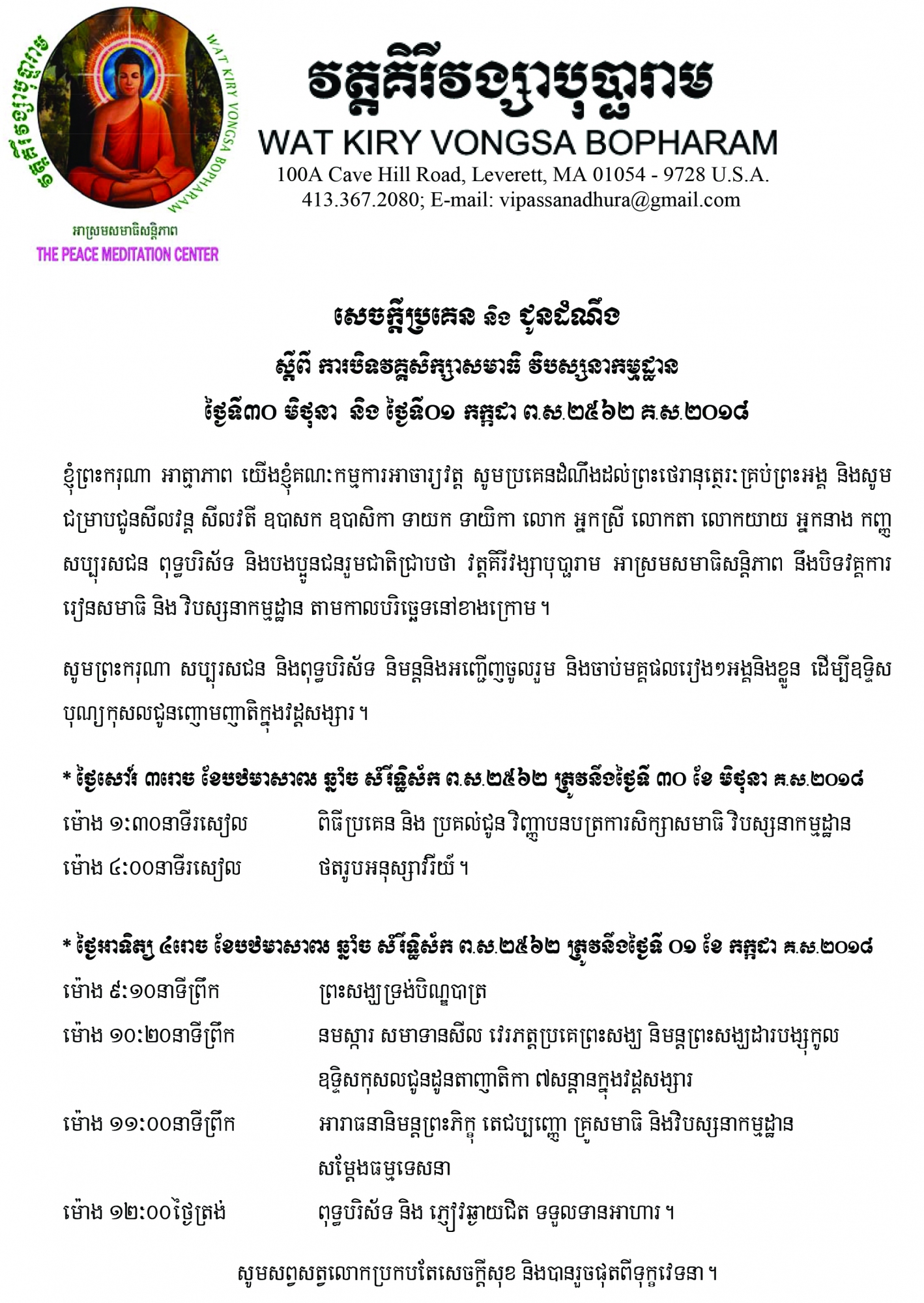
Closing Ceremony: A 10-day Meditation Retreat on June 30 – July 1, 2562/2018

By admin · Comments (0)
Thursday, June 28th, 2018

សេចក្ដីប្រគេន និង ជូនដំណឹង ស្ដីពី ការបិទវគ្គសិក្សាសមាធិ វិបស្សនាកម្មដ្ឋាន ថ្ងៃទី៣០ មិថុនា ដល់ ០១ កក្កដា ព.ស.២៥៦២ គ.ស.២០១៨
ថ្ងៃព្រហស្បតិ៍ ១រោច ខែបឋមាសាឍ ឆ្នាំច សំរឹទ្ធិស័ក ព.ស.២៥៦២ ត្រូវនឹងថ្ងៃទី២៨ ខែមិថុនា គ.ស.២០១៨
Thursday the 1st Waning Moon of Āsāḷha B.E.2562, June 28, A.D.2018 Year of the Dog
មានពីរភាសា ខ្មែរ និង អង់គ្លេស  Available in Khmer, English

Read More→

Comments (0)
Categories : Events, Vipassana Center
« Previous Page
Next Page »

MEDITATION DOCUMENTARIES

DHAMMA TALK BY VEN. KETODHAMMO

ព្រះធម្មទេសនាសំដែងដោយ ព្រះធម្មវិបស្សនា កេតុធម្មោ សំ ប៊ុនធឿន

Dhamma talk by the late and renowned Cambodian Vipassana Buddhist Master Ven. Ketodhammo Som Bunthoeun.

TEMPLENEWS TV SHOWS

Watch our shows on LTC – Channel 95
Broadcast hours | Fridays: 4 – 5 pm, 8 – 9 pm
Tuesdays 11 am - 12 pm

Email: templenewscast@yahoo.com
Phone: 978.853.9623
Website: templenews.org
Youtube: www.youtube.com/templenewstv