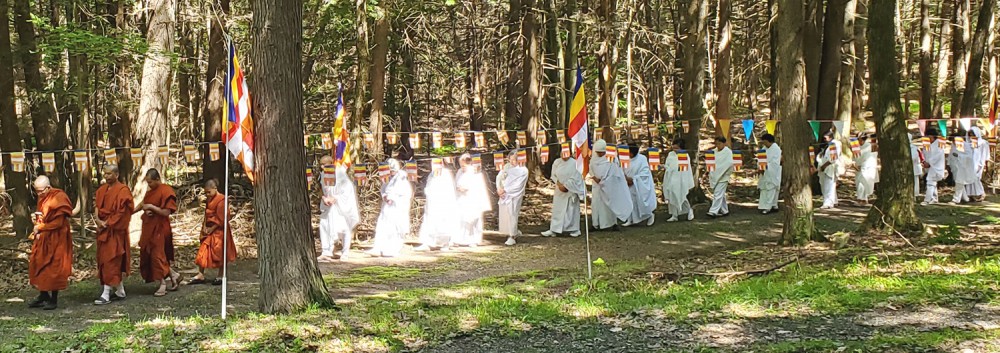
ពិធីបុណ្យចូលព្រះវស្សា នៅវត្ដគិរីវង្សាបុប្ផារាម អាស្រមសមាធិសន្ដិភាព នាថ្ងៃទី៣០ កក្កដា ២៥៧០/២០២៦
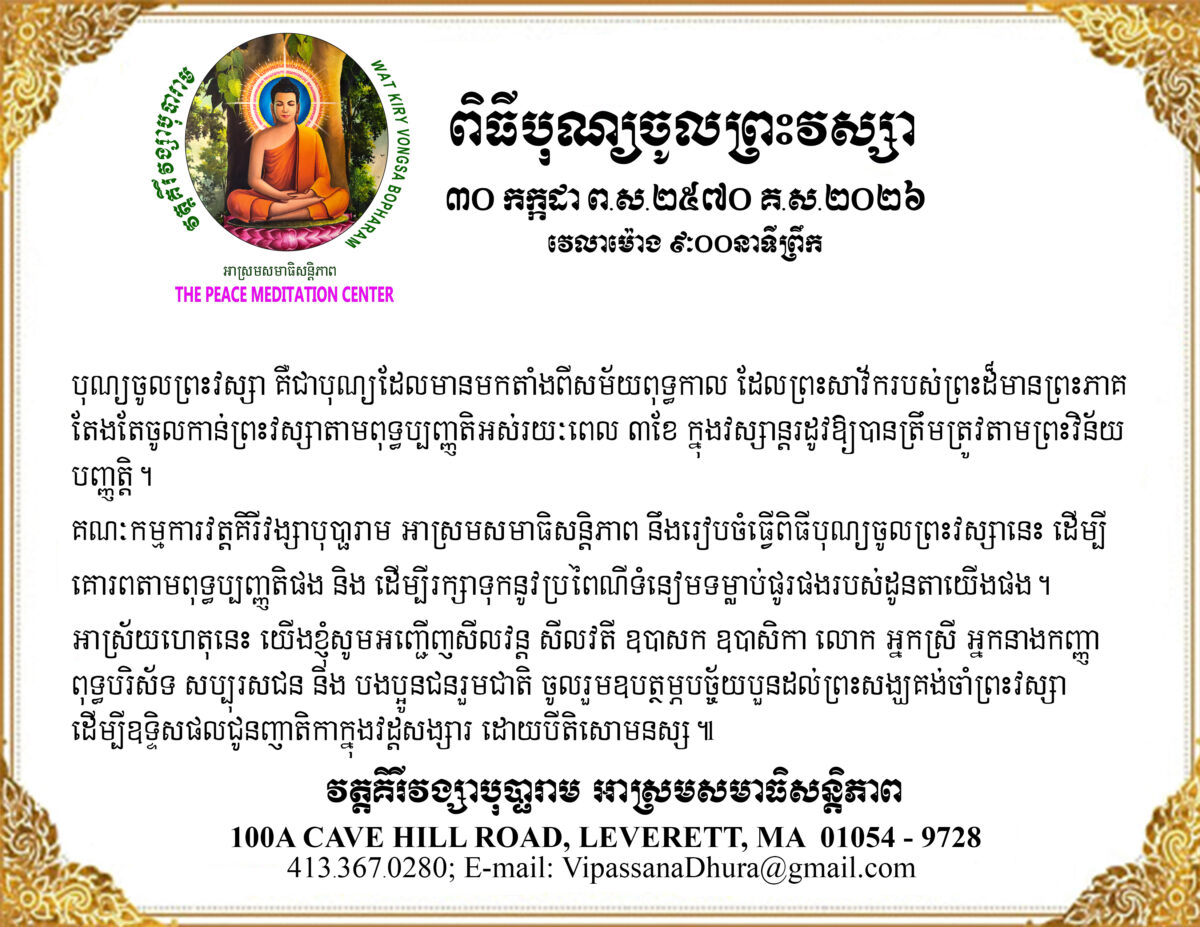
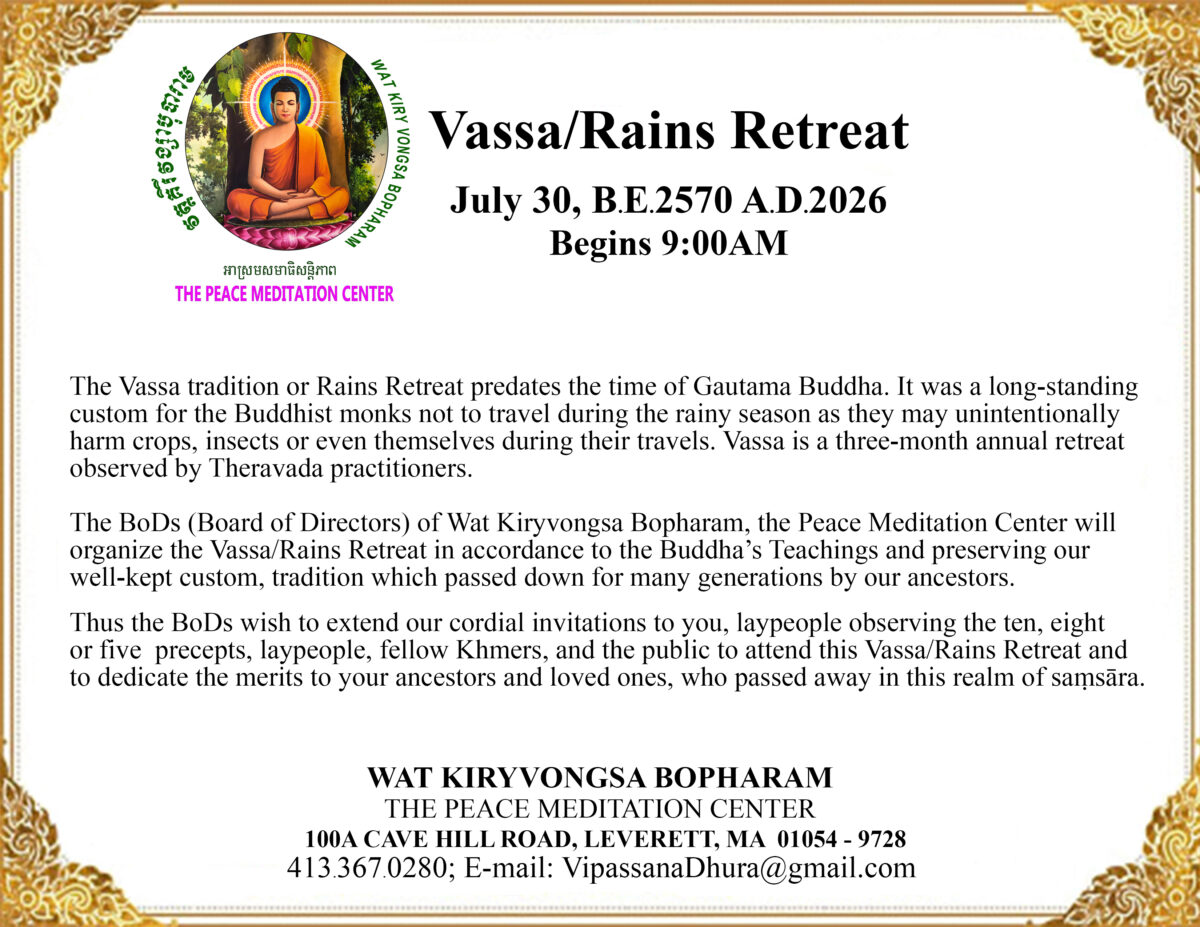
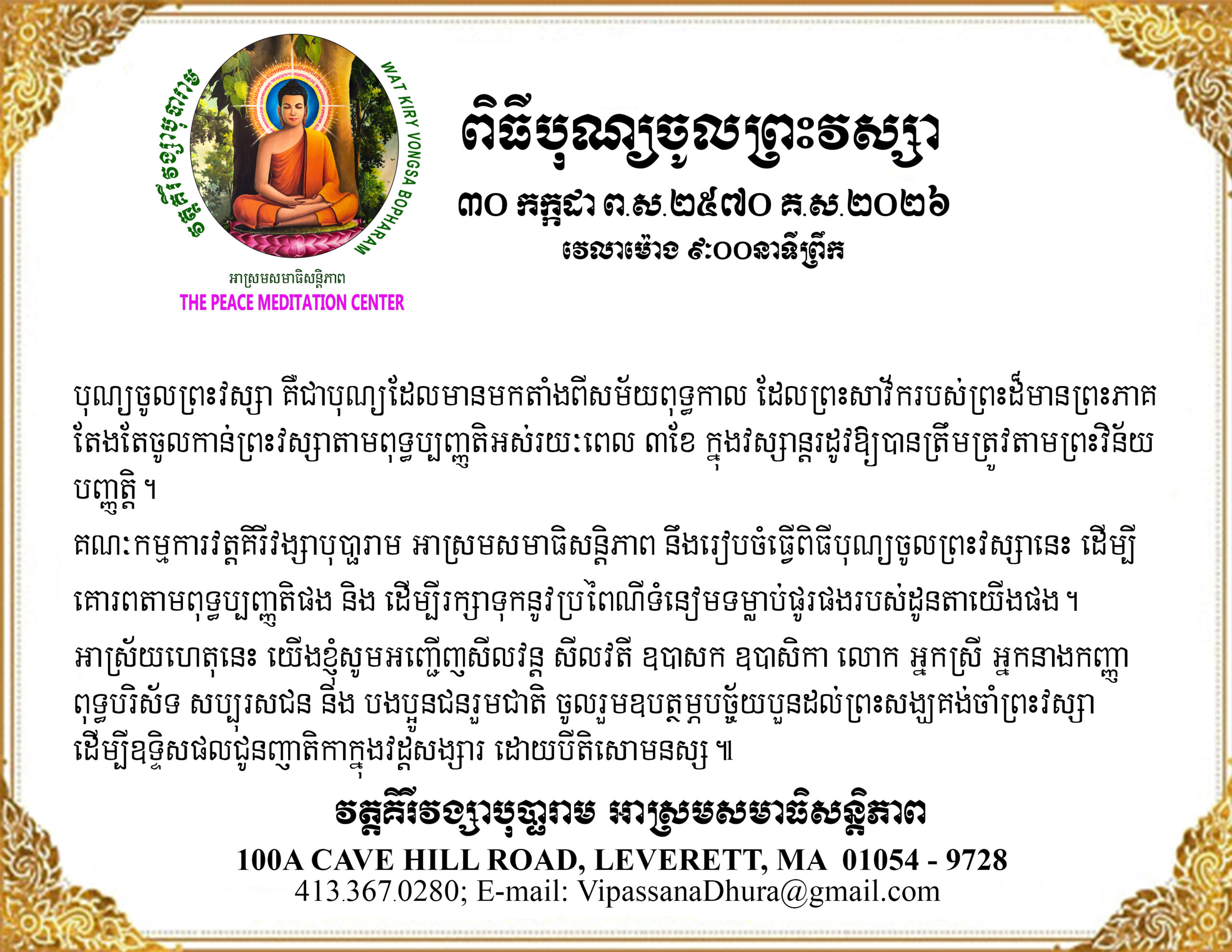
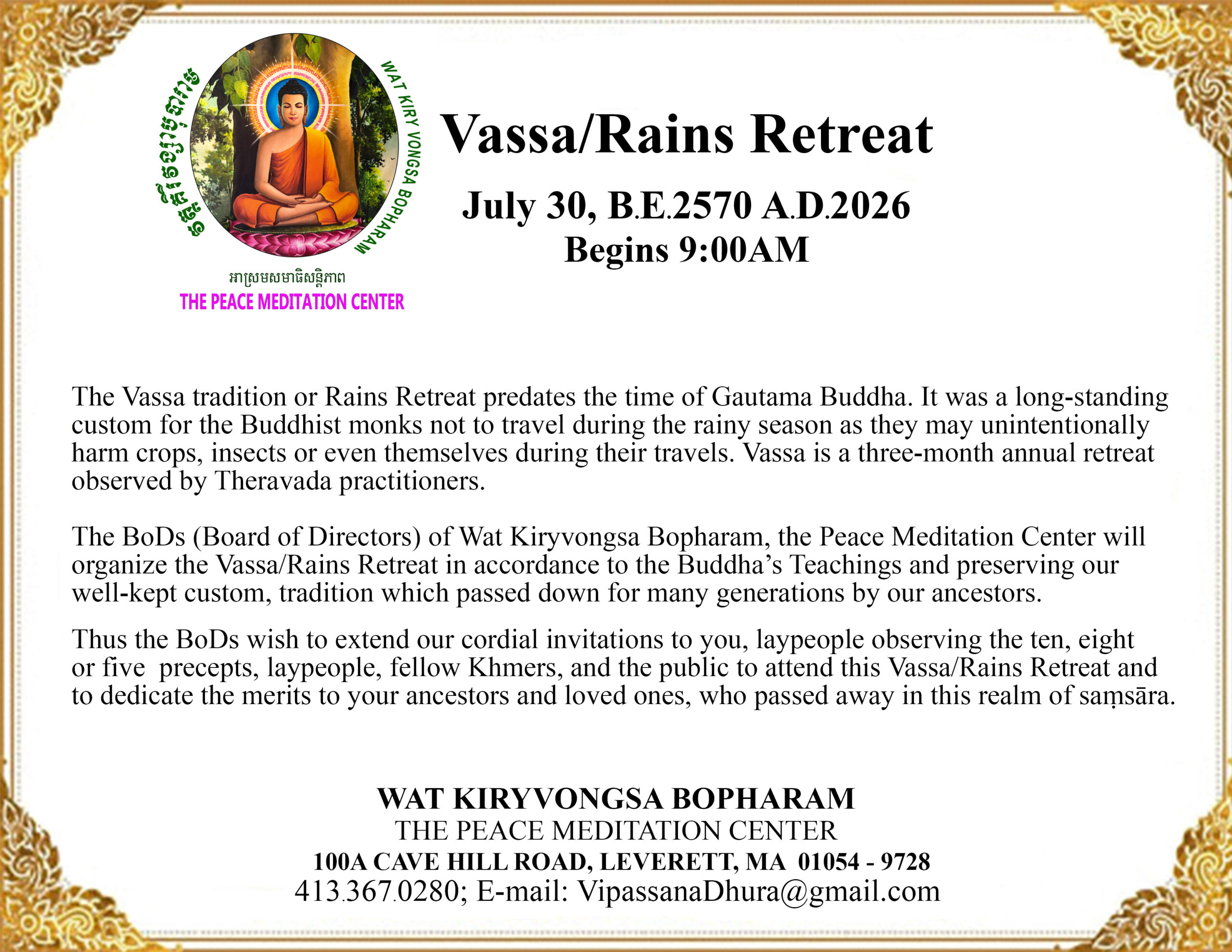
ប្រវត្ដិសង្ខេប ស្ដីពី ការចូលព្រះវស្សា សម្រាប់ភិក្ខុ និង សាមណេរ មានតាំងពីពុទ្ធកាលមកម្ល៉េះ ត្រូវប្រព្រឹត្ដនៅថ្ងៃ ១រោច ខែអាសាឍ ដល់ថ្ងៃ ១៥កើត ខែអស្សុជ (ឆ្នាំនេះ ព.ស.២៥៧០ ចំថ្ងៃ ១រោច ខែទុតិយាសាឍ) ។
១. ការចាំព្រះវស្សាមានពីរយ៉ាង៖ ចូលវស្សាទី១ ហៅថា បុរិមិកាវស្សា ថ្ងៃ ១រោច ខែអាសាឍ ដល់ថ្ងៃ ១៥កើត ពេញបូណ៌មី ខែអស្សុជ; ចូលវស្សាទី២ ហៅថា បច្ឆិមិកាវស្សា ថ្ងៃ ១រោច ខែស្រាពណ៍ ដល់ថ្ងៃ ១៥កើត ពេញបូណ៌មី ខែកត្ដិក។ ចូលវស្សាទី១ បានអានិសង្ស៥ (គុណប្រយោជន៍ ឬ សេចក្ដីសុខចម្រើន), ចូលវស្សាទី២ ឥតបានអានិសង្សអ្វីទាំងអស់។
២. ភិក្ខុត្រូវអាបត្ដិទុក្កដ (អំពើអាក្រក់, បាប) ប្រសិនបើឥតចូលវស្សាទេ។
៣. ធុរៈពីរយ៉ាងក្នុងព្រះពុទ្ធសាសនា ដែលព្រះសង្ឃត្រូវសិក្សាមាន៖ គន្ធធុរៈ (ព្រះបរិយត្ដិធម៌) និង វិបស្សនាធុរៈ (សមាធិ និង វិបស្សនាកម្មដ្ឋាន)។
៤. ប្រសិនបើឥតបានរៀននិងបដិបត្ដិសមាធិ និង វិបស្សនាកម្មដ្ឋានទេ ព្រះសម្មាសម្ពុទ្ធបន្ទោសថា ព្រះសង្ឃទាំងឡាយស៊ីឈ្នួលតថាគត គ្រាន់តែបានចងចាំពាក្យតថាគត រស់បានបច្ច័យបួន លុយស៊ីឈ្នួល។ ដើម្បីកុំឱ្យព្រះសម្មាសម្ពុទ្ធបន្ទោស ត្រូវរៀនសីល៥ សីល៨ សីល១០ រៀននិងបដិបត្ដិសមាធិ និង វិបស្សនាកម្មដ្ឋាន រៀនធម្មវិន័យ ភាសាបាលី ។ល។
៥. សេចក្ដីពិតមិនមែនចាំទៀនវស្សាទេដើម្បីកុំឱ្យដាច់វស្សា ការពិតគឹការទំនុកបម្រុងនូវបច្ច័យបួនដល់ព្រះភិក្ខុសង្ឃ ព្រះភិក្ខុសង្ឃត្រូវធ្វើនូវសីល សមាធិ បញ្ញា។
ក្នុងពុទ្ធកាល ការចាំព្រះវស្សាមានសម្រាប់ភិក្ខុ ភិក្ខុនី សាមណេរ និង សាមណេរី។ បច្ចុប្បន្នមានតែភិក្ខុ និង សាមណេរ។ ភិក្ខុនី និង សាមណេរី ដាច់ពូជលែងមាន។
ស្ដ្រីនៅតែអាចរក្សាសីល៥ សីល៨ ឬសីល១០បាន ក្នុងពេលបច្ចុប្បន្ននេះ។ ភិក្ខុនីអានថា ភិក-ខុណី ស្ដ្រីដែលបួសជាភិក្ខុ។ សាមណេរអានថា សាម៉ៈណេ ឬ ណែ។
រៀបរៀងដោយទូរទស្សន៍ Templenews.org ថ្ងៃ ២រោច ខែអាសាឍ ពុទ្ធសករាជ ២៥៦៩ ត្រូវនឹងថ្ងៃទី១២ ខែកក្កដា គ្រិស្ដសករាជ ២០២៥
Brief History of Vassa (Rains Retreat) for Bhikkhu and Sāmanera, an annual three-month monastic retreat practiced especially in the Theravada Buddhist tradition since the time of the Buddha, held on the 1st Waning Moon of Āsāḷha Lunar Month to the 15th Waxing Moon (Full Moon) of Assayuja Lunar Month. This year Buddhist Era 2570 it takes place on Thursday the 1st Waning Moon of Tutiyasadh.
1. There are two specific times designated for entering or obsreving the vassa: The first period is called Purimikā (first vassa) takes place on the 1st Waning Moon of Āsāļha to the 15th Waxing Moon of Assayuja. The second period is called Pacchimikā (second vassa) takes place on the 1st Waning Moon of Sāvaṇa to the 15th Waxing Moon of Kattikā. The first vassa period receives five anisangsa (fruit of merit or benefits or privileges for the Buddhist monks, who are privileged to receive the Kathina Robe). The second vassa period and any bhikkhus, who do not enter vassa are not privileged to receive anisangsa.
2. A bhikkhu commits a dukkaṭa apatti (An offense of wrong doing) if he does not observe/enter vassa.
3. There are two requisites for the Buddhist monks in Buddhism: Gandhadhura refers to the study of the Buddhist scriptures. It emphasizes the obligation of bhikkhus to study, comprehend, and memorize scriptures, underscoring their educational responsibilities. The second is it emphasizes the obligation of bhikkhus to study, understand, and practice Vipassanādhura: Samādhi (Meditation) and Vipassanā (Insight Meditation), underscoring their educational responsibilities and necessities.
4. If the ordained bhikkhu does not study and practice Samādhi and Vipassanā, the Tathāgata (Buddha) would scold him that the monk is for hire which means he knows enough dhamma for his survival that is called a monk for rent. If he wants the Buddha to praise him, he must learn and understand the 5, 8, and 10 precepts, dhamma, the Pali language of the Buddha, and learn and practice Samādhi and Vipassanā.
5. The Buddhist monks must practice Sīla, Samādhi, and Paññā (Moral Discipline, Meditation, and Wisdom*).
Rains Retreat is not about making sure that the candle keeps burning without interruptions at all.
In the time of the Buddha, bhikkhus, bhikkhunīs, sāmanera, and sāmaṇerī enter vassa. Presently only bhikkhus and sāmanera do.
The lineages of bhikkhunī and sāmaṇerī became extinct. Bhikkhuni is a fully ordained female Buddhist monk. However, female laypeople can still take or observe/practice the 5, 8, or 10 precepts of a nun to experience monastic life while living at home.
*In the context of Sīla, Samādhi, and Paññā (the Threefold Training in Buddhism), Paññā (wisdom) does not refer to ordinary intellectual knowledge, academic learning, technical skill, or worldly cleverness. It refers to liberating wisdom — the direct understanding of reality that leads to the end of suffering.
This wisdom has several aspects:
- Understanding impermanence (Anicca): Seeing that all conditioned things are constantly changing.
- Understanding suffering (Dukkha): Recognizing that attachment to changing things inevitably brings dissatisfaction/unsatisfactoriness and suffering.
- Understanding non-self (Anattā): Realizing that there is no permanent, independent self or soul behind our experience.
- Seeing dependent origination: Understanding that all phenomena arise due to causes (ហេតុ) and conditions (បច្ច័យ) rather than existing independently.
- Direct experiential insight: This is the most important aspect. Paññā is not merely believing these teachings or understanding them conceptually. Through meditation (Samādhi), one directly observes the nature of mind and body until these truths become personally evident.Two levels of wisdom
Many Buddhist traditions describe wisdom in stages:
- Wisdom from learning (Sutamayā Paññā): Gained by listening to or reading the teachings.
- Wisdom from reflection (Cintāmayā Paññā): Gained by thinking deeply and examining the teachings.
- Wisdom from meditation (Bhāvanāmayā Paññā): Gained through direct meditative experience. This is the wisdom that transforms the mind and leads toward liberation (Nibbāna or the Perfect Peace).
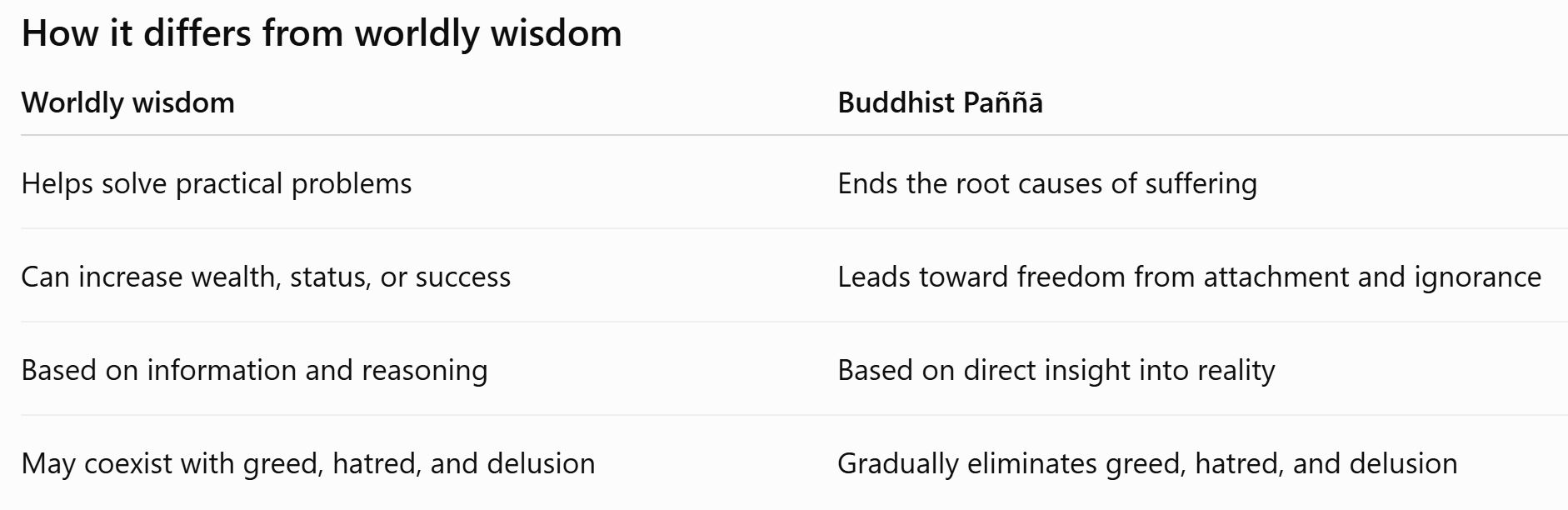 How it differs from worldly wisdom
Worldly wisdom Buddhist Paññā
Helps solve practical problems Ends the root causes of suffering
Can increase wealth, status, or success Leads toward freedom from attachment and ignorance
Based on information and reasoning Based on direct insight into reality
May coexist with greed, hatred, and delusion Gradually eliminates greed, hatred, and delusion
For example, a brilliant scientist may possess extraordinary worldly knowledge but still experience anxiety, anger, and attachment. A practitioner who has developed Paññā may have little formal education yet deeply understand the nature of experience and respond to life’s changes with equanimity.
So, in Sīla–Samādhi–Paññā, Paññā means spiritual or liberating wisdom: the insight that sees things as they truly are and ultimately frees the mind from ignorance and suffering.
Compiled by Templenews.org, the 7th Waning Moon of Āsāļha, Buddhist Era 2569, July 12, A.D.2025