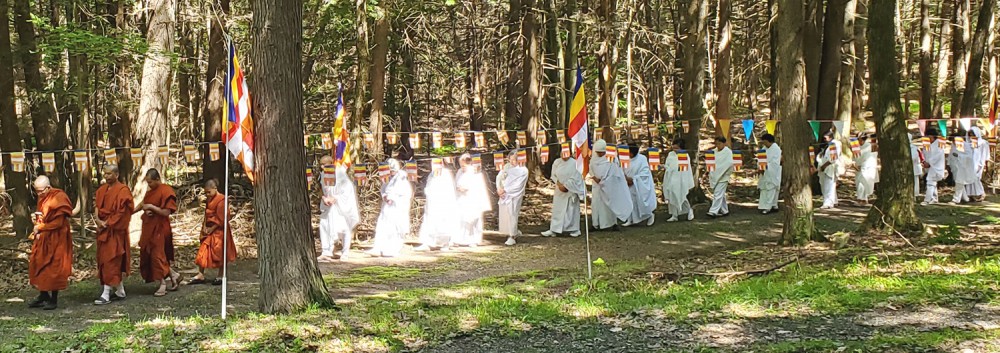
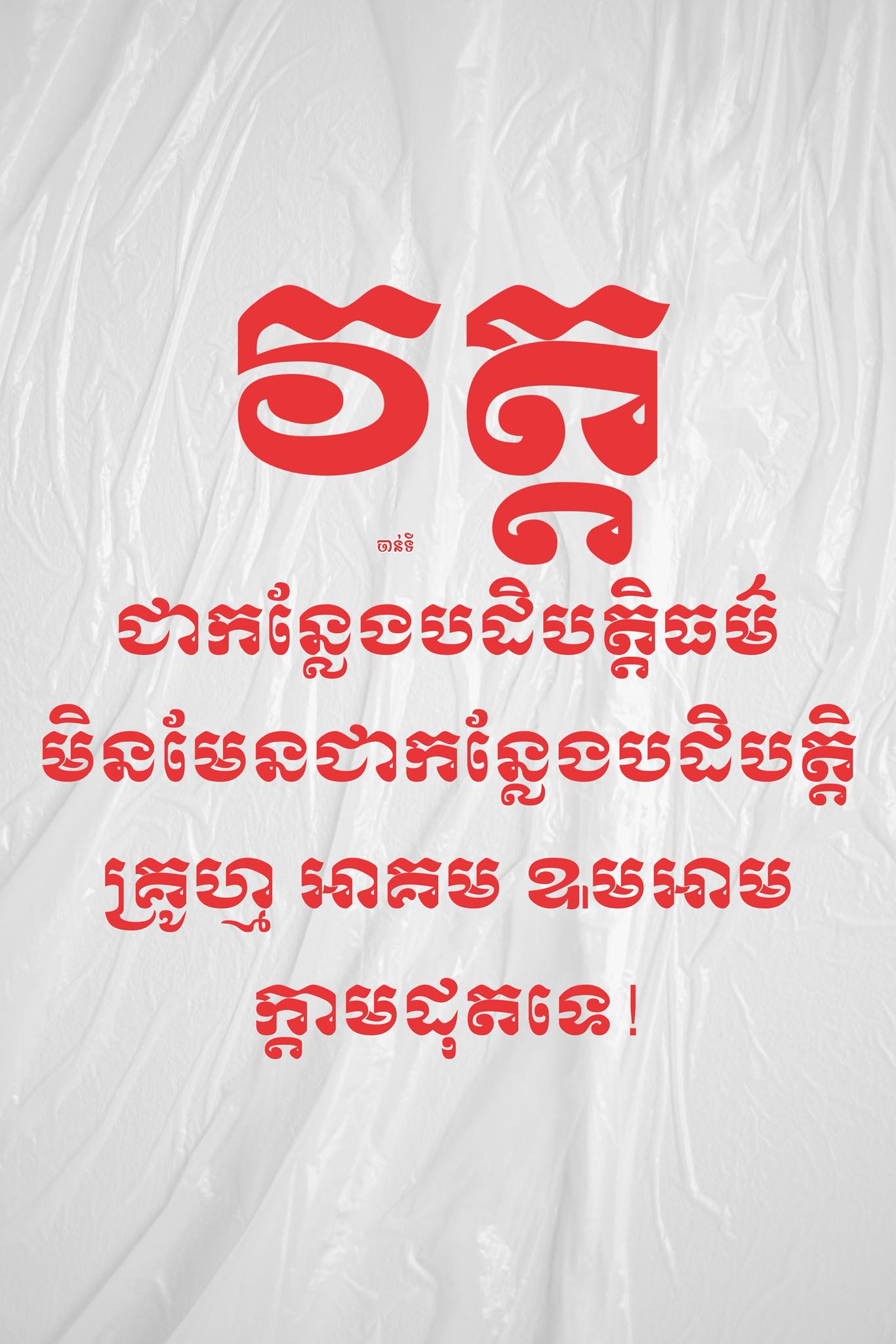
វត្ដជាកន្លែងបដិបត្ដិធម៌ មិនមែនជាកន្លែងបដិបត្ដិគ្រូហ្ម អាគមឩមអាមក្ដាមដុតទេ។
Wat is a place of worship and practicing the dhamma, not for superstitious practice
វត្ដជាកន្លែងបដិបត្ដិធម៌ មិនមែនជាកន្លែងបដិបត្ដិគ្រូហ្ម អាគម ឩមអាមក្ដាមដុតទេ។ អាគមឩមអាមក្ដាមដុត ព្រះពុទ្ធទ្រង់ហាមមិនឱ្យអ្នកបួស រៀនសូត្រកួចកាន់ ក្រណាន់ជ្រុលជ្រួសភ្លេចគិតសីលផ្នួស ដើរស្ដោះព្រួសគេ។ ភិក្ខុណាបដិបត្ដិអាគមឩមអាមក្ដាមដុត ទស្សន៍ទាយ ស្ដោះ ព្រួស ស្រោចទឹក លើករាសី ធ្វើស្នេហ៍ ធ្វើយ័ន្ដ ត្រូវអាបត្ដិបរាជិក។ អាគមឩមអាមក្ដាមដុតជាវិជ្ជាតិរច្ឆាន វិជ្ជាទមិឡ មិច្ឆាអាជីវៈ វិជ្ជាថោកទាប ។ ភិក្ខុមានតែបាត្រមួយ ប្រៀបបាននឹងសត្វស្លាបបានតែមួយគែ ឬ ពោះចង្កៀង ឬ «ក្រពះបឋម» ឬ «ពោះវៀនប៉ោង» ឬ «ក្រពះសន្សំ» ដើម្បីរស់។ ដូច្នេះភិក្ខុណាបដិបត្ដិអាគមឩមអាមក្ដាមដុតជាបុគ្គលលោភលន់ ប្រាសចាកនឹងព្រះពុទ្ធសាសនាទាំងស្រុង យកព្រះពុទ្ធសាសនាធ្វើពាណិជ្ជកម្ម ។
ផ្លូវដែលសង្គ្រោះខ្លួនឯងបានមានតែបដិបត្ដិ សីល សមាធិ បញ្ញា ។
អាគមឩមអាមក្ដាមដុត មិនមែនជាធម៌នៃព្រះពុទ្ធសាសនាទេ។
Wat (Buddhist temple) is a place of worship and practicing the dhamma (the teachings of the Buddha) and not a place for practicing shamanic rituals, sorcery, spells, or superstitious incantations, black magic, voodoo,…
Superstition, black magic, voodoo,… the Buddha prohibits the Buddhist monks from learning, practicing it that will lead them away from sila (virtue, morality).
Superstition, black magic, voodoo,…is not Buddhism.
It’s called greed when a bhikkhu practices black magic, using Buddhism for commerce, business.
A bhikkhu who practices black magic commits an offense called pārājika*.
A bhikkhu has just a single rice bowl just as the feathery bird has a crop (food pouch) for survival.
The path to liberate yourself or oneself is virtue (sila), meditation (samādhi, vipassana), and wisdom (paññā).
*Pārājika refers to the four gravest offenses in the Buddhist monastic code (Vinaya), resulting in immediate, automatic, and irreversible expulsion from the Sangha. Known as “defeats,” these acts represent a total abandonment of the monkhood’s purpose. The four prohibitions are sexual intercourse, theft, killing, and falsely claiming superior spiritual attainments. The Four Pārājikas for Monks: Sexual Intercourse: Any sexual activity causes the loss of monkhood, regardless of sensation or circumstance. Theft: Stealing anything worth one pada (a measure of value) or more. Murder: Intentionally taking a human life, or encouraging someone to take their own life, or praising the beauty of death. False Spiritual Claims: Lying about one’s spiritual attainments, such as claiming to be an Arhat or to have attained higher meditation states (Jhanas) that one has not.
ប្រភពដើម៖ ភិក្ខុ មង្គលរក្ខិតោ (ព្រះនាមកំណើតឈុំ ចាន់ទី)
Original Source: Bhikkhu MangkalaRakkhito (Birthname: Chhum Chanty (Janti))
ថ្ងៃពុធ ៥រោច ខែពិសាខ ឆ្នាំមមី អដ្ឋស័ក ពុទ្ធសករាជ ២៥៧០ ត្រូវនឹងថ្ងៃទី៦ ខែឧសភា គ្រិស្ដសករាជ ២០២៦
Wednesday the 5th Waning Moon of Vesākha, Year of the Horse, Buddhist Era, equivalent to May 6, A.D.2026